작성자:
Iros
- 공유 링크 만들기
- X
- 이메일
- 기타 앱
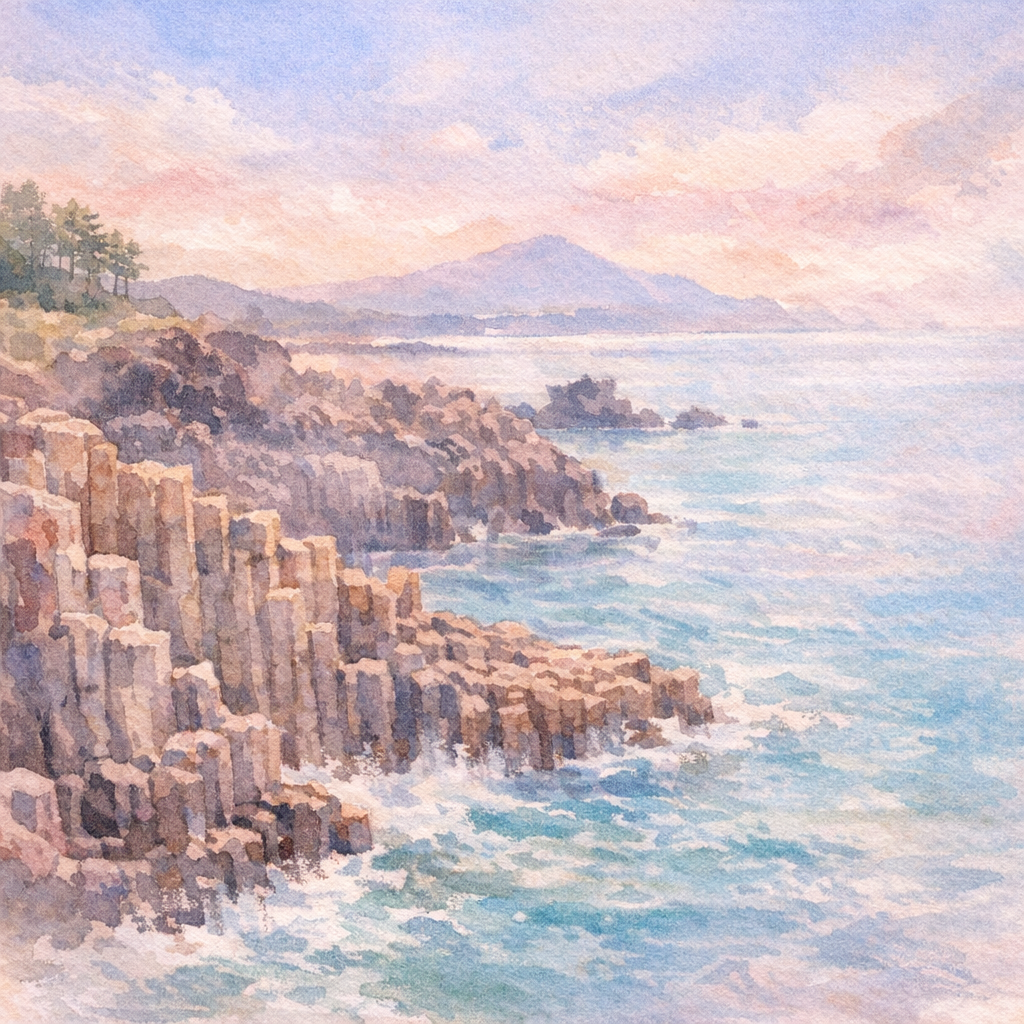
When people talk about Jeju Island, they usually go straight to Hallasan Mountain, tangerine farms, cute cafés, or those dreamy beaches that look like they were made for travel ads. I get it. I really do. Jeju has that soft, pretty side. But Jusangjeolli Cliff is not soft. Not exactly.
It feels more like Jeju showing you its old temper.
The first thing you notice is the shape of the rocks. These tall, dark, almost perfectly cut stone pillars rise along the coastline like someone stacked giant black pencils against the sea. Some are hexagonal, some are slightly crooked, and honestly that’s what makes them better. Too perfect would be boring, right? The whole scene looks designed, but it wasn’t. It came from lava, cold seawater, pressure, cracking, cooling, time... all that big earth science stuff that sounds dry in a textbook but suddenly feels very real when waves are smashing into the cliff right in front of you.
Jusangjeolli Cliff in Jeju was formed when lava from volcanic activity cooled rapidly after meeting the ocean. As the lava contracted, it cracked into column-like shapes. That’s the basic explanation. But standing there, with the wind pushing your jacket around and the sea spray occasionally slapping your face, you don’t really think, “Ah yes, columnar joints.” You think something closer to, “Wow, the planet is kind of scary.” In a good way.
I visited on a day when the wind was stronger than expected, and I remember putting my phone back in my pocket for a few minutes because taking photos felt like missing the point. That sounds a bit dramatic, I know. But sometimes you just need to stare. As someone who spends most weekdays dealing with screens, servers, messages, and tiny digital problems that somehow become big problems, places like this reset my brain in a very old-fashioned way.
The viewing deck is well organized, so you don’t need hiking gear or some heroic level of fitness. You walk in, follow the path, and the cliff appears with that “oh, okay, this is why people come here” kind of timing. It’s easy, but not boring. That’s a good travel combo.
If you ask me, Jusangjeolli Cliff is best when it feels slightly moody. Bright blue skies are nice, sure, but a bit of cloud, some wind, and active waves make the place feel alive. The cliffs were made by violent natural forces, so a perfectly calm day can feel almost too polite. Maybe that’s just my taste, but I like landscapes with a bit of attitude.
Morning is great if you want cleaner photos and fewer people in the background. Around opening time, the air is cooler, tour buses haven’t fully arrived yet, and the walking path feels more relaxed. You can take your time without feeling like you’re blocking someone’s selfie angle. Which, let’s be honest, happens a lot at famous spots in Korea.
Late afternoon is also beautiful. The light softens, the black volcanic rocks start catching warm tones, and the ocean turns into that deep Jeju blue that photos never quite capture properly. Sunset itself can be lovely, but the official viewing area may feel a bit rushed depending on closing time, season, and weather, so check before you go. I know, checking opening hours is not romantic. But neither is arriving five minutes before they stop entry.
One small practical thing from my own trip: wear shoes with decent grip. The deck itself is maintained, but Jeju’s coastal wind and sea mist can make things feel slippery in spots. I once wore casual flat sandals because I thought, “It’s just a short walk.” Bad call. Not disaster-level bad, but enough to make me walk like a nervous penguin for ten minutes...
Now, if you’re coming to Korea because of KPOP, Korean dramas, or films, Jeju is one of those places that quietly shows up everywhere. Not always with a big sign saying, “This exact scene happened here!” but the island’s scenery has been used again and again in dramas, music-related travel content, photo shoots, variety shows, and romantic montage scenes where everyone suddenly looks emotionally complicated.
Jusangjeolli Cliff itself has that cinematic look producers love: dark volcanic columns, white waves, strong wind, and an ocean that can look peaceful or tragic depending on the camera angle. Even when there isn’t a specific drama plaque in front of you, the place feels like a natural filming set. You can easily imagine a lead character standing there after a breakup, pretending not to cry while the sea does all the dramatic work. Very efficient, honestly.
The wider Jungmun Tourist Complex and Seogwipo area are especially useful if you want to build a mini Korean entertainment-themed route. Nearby coastlines, luxury hotels, beaches, and scenic roads often appear in Korean travel shows and celebrity content. Idols and actors visit Jeju for magazine shoots, reality programs, healing trips, and those “we are just casually walking by the sea but somehow look perfect” moments. As a normal office worker, I do not look perfect walking by the sea. My hair becomes software-error level chaos. But still, the vibe is there.
If you are a KPOP fan, I’d treat Jusangjeolli as more of a mood spot than a “stand exactly where my bias stood” location. Come here for the album-cover energy. Dark rocks, wind, sea, serious face, maybe sunglasses if you’re brave. Then head into Jungmun or Seogwipo for cafés, coastal roads, and the kind of places Korean celebrities tend to visit when they want Jeju to look peaceful but still stylish.
Also, check current listings before visiting any KPOP-themed attraction in Jeju, because entertainment museums and pop-up spaces change more often than travelers expect. Korea is fast like that. One year something is everywhere on Instagram, and the next year it has become a different café, a gallery, or a mysterious empty building with great lighting.
This is where I get a little opinionated. Some people visit Jusangjeolli Cliff, take five photos, say “nice,” and leave in fifteen minutes. Technically, that works. But I think it’s a waste.
The cliff is not huge in the way Hallasan is huge. You won’t spend half a day climbing it. But it rewards slow looking. Watch how the waves hit different sections of the columns. Listen to the sound change depending on the tide. Notice how the rock color shifts from black to gray to brown when the light moves. It’s one of those places where the details only show up when you stop rushing.
My very realistic tip: put your phone away for just three minutes after you arrive. Not forever. I’m not trying to be a monk. Just three minutes. Let your eyes adjust before you start framing everything for social media. I did this the second time I visited, and weirdly enough, the photos I took afterward were better because I knew what I actually wanted to capture.
For photos, a wide-angle lens helps. Most smartphones can handle it, but be careful with ultra-wide distortion because the columns can start looking bent and strange. If you’re traveling with someone, ask them to take a shot from slightly behind you with the cliff and ocean in the frame. It gives scale. Without a person in the photo, the pillars sometimes look smaller than they really are, which is annoying because in person they feel massive.
And yes, if you’re traveling with kids or older family members, this is still a manageable stop. The official walkway makes it easier than many natural attractions in Jeju. Just keep an eye on windy weather and don’t rush people along the viewing points.
After the cliff, food becomes the main event. It always does. The Jungmun area has plenty of restaurants, and because many foreign visitors stay around the resorts, menus are often easier to understand than in smaller local towns. That doesn’t mean everything is touristy, though. You can still eat very well if you choose carefully.
The food around Jusangjeolli Cliff leans toward seafood, black pork BBQ, cutlassfish dishes, abalone, and café-style desserts. Jeju is an island, so seafood makes sense. But the black pork is the thing many visitors remember most, especially if it’s their first time eating Korean BBQ properly.
Jeju black pork BBQ is one of those meals that makes people suddenly quiet for a few minutes. Thick slices of pork belly and shoulder go on the grill, the edges crisp up, and then you wrap the meat in lettuce or perilla leaves with garlic, ssamjang, maybe some kimchi. It’s simple, but when the pork is good, wow. No need to over-explain it.
Look for popular black pork restaurants around Jungmun or Seogwipo, especially places with charcoal grilling and steady local traffic. If a restaurant has an English menu, that’s helpful, but don’t judge only by that. Some of the best meals in Korea happen in places where the menu translation is slightly funny and the staff just points kindly at what everyone else is eating.
If you want something very Jeju, try galchi jorim, which is braised cutlassfish in a spicy-sweet sauce. It usually comes bubbling in a big pot with radish, green onion, and a sauce that begs for rice. Foreign travelers who enjoy bold flavors usually love it. If you’re sensitive to spice, ask before ordering because some places go harder than expected.
Jeonbokjuk, or abalone porridge, is a softer option. It’s warm, gentle, and honestly perfect if you’ve been walking around in the wind. Not every meal needs to attack you with chili paste. Sometimes you need something calm.
Jungmun and Seogwipo have a growing café scene, and this is where I usually take a break. As a 40-something IT guy, I have a deeply personal relationship with coffee. Maybe too deep. After walking along the cliff, I like finding a café with big windows, ordering an iced Americano or green tea latte, and pretending I don’t have unread work messages waiting for me.
Ocean-view cafés near Jungmun can be busy, especially on weekends, but the view is part of the price. If you want a quieter seat, go between lunch and dinner. Around 3 PM can be surprisingly nice, unless a tour group arrives at the exact same time, in which case... well, welcome to popular Jeju.
Jusangjeolli Cliff is located near the Jungmun Tourist Complex in Seogwipo, on the southern side of Jeju Island. If you’re staying in Jungmun, it’s very easy. If you’re staying in Jeju City, expect around 45 minutes to a little over an hour by car, depending on traffic and weather. Jeju driving can feel relaxed, but don’t underestimate distances. The island looks small on a map until you start moving across it.
Renting a car is the most convenient option, especially if you want to combine multiple places in one day. Public buses are available, but they can take longer and require patience. Taxis work too, though costs add up if you’re hopping between attractions.
The entrance fee is usually affordable, but prices and opening hours can change, so check the latest official information before you go. I know that sounds like boring advice, but I’ve learned this the hard way in Korea. Attractions sometimes adjust hours due to weather, maintenance, or seasonal schedules, and nothing ruins a travel mood faster than standing in front of a closed gate with coffee in one hand and regret in the other.
If I were planning this for a friend visiting Jeju for the first time, I wouldn’t make Jusangjeolli Cliff the only stop. It’s great, but it works even better as part of a relaxed half-day around Jungmun and Seogwipo. No military-style schedule. Just enough movement to feel like you did something.
This route works especially well for travelers who don’t want to spend the whole day in a car. Jeju is beautiful, but constantly driving from one end of the island to the other can make the trip feel like a logistics project. And as someone who already deals with enough logistics at work, I try not to turn vacations into another dashboard to manage.
Jeju is foreigner-friendly in many ways, but Jusangjeolli Cliff is still a natural site, not a theme park. That means weather matters. Wind matters. Shoes matter. And your expectations matter too.
If you’re expecting a long hike, you may find it shorter than imagined. If you’re expecting just a quick rock view, you may be surprised by how powerful it feels. That’s the funny thing about travel. The place doesn’t change, but your mood does.
One more tiny thing: don’t rush back to the parking lot the second you finish taking photos. Stand near the railing, listen for a while, and let the place settle in. I know that sounds sentimental, but travel memories usually come from those extra few minutes, not from the perfectly planned schedule.
Yes. Very much yes.
Jusangjeolli Cliff is one of the best places in Jeju to feel the island’s volcanic identity without needing to climb a mountain or study geology beforehand. It’s easy to access, visually powerful, and close to good food, beaches, cafés, and Korean entertainment-related routes around Jungmun and Seogwipo.
If you love nature, you’ll enjoy the raw landscape. If you’re into Korean dramas or KPOP travel vibes, you’ll get that cinematic Jeju atmosphere that looks amazing in photos. If you’re just hungry and tired from sightseeing, well, black pork BBQ nearby will take care of that side of the trip too.
For me, Jusangjeolli is not just a “see it once and move on” place. It’s the kind of spot that reminds you Jeju wasn’t made to be cute for tourists. It was made by fire, water, wind, and time. And somehow, after all that violence, it became beautiful. Funny how that works.
댓글
댓글 쓰기