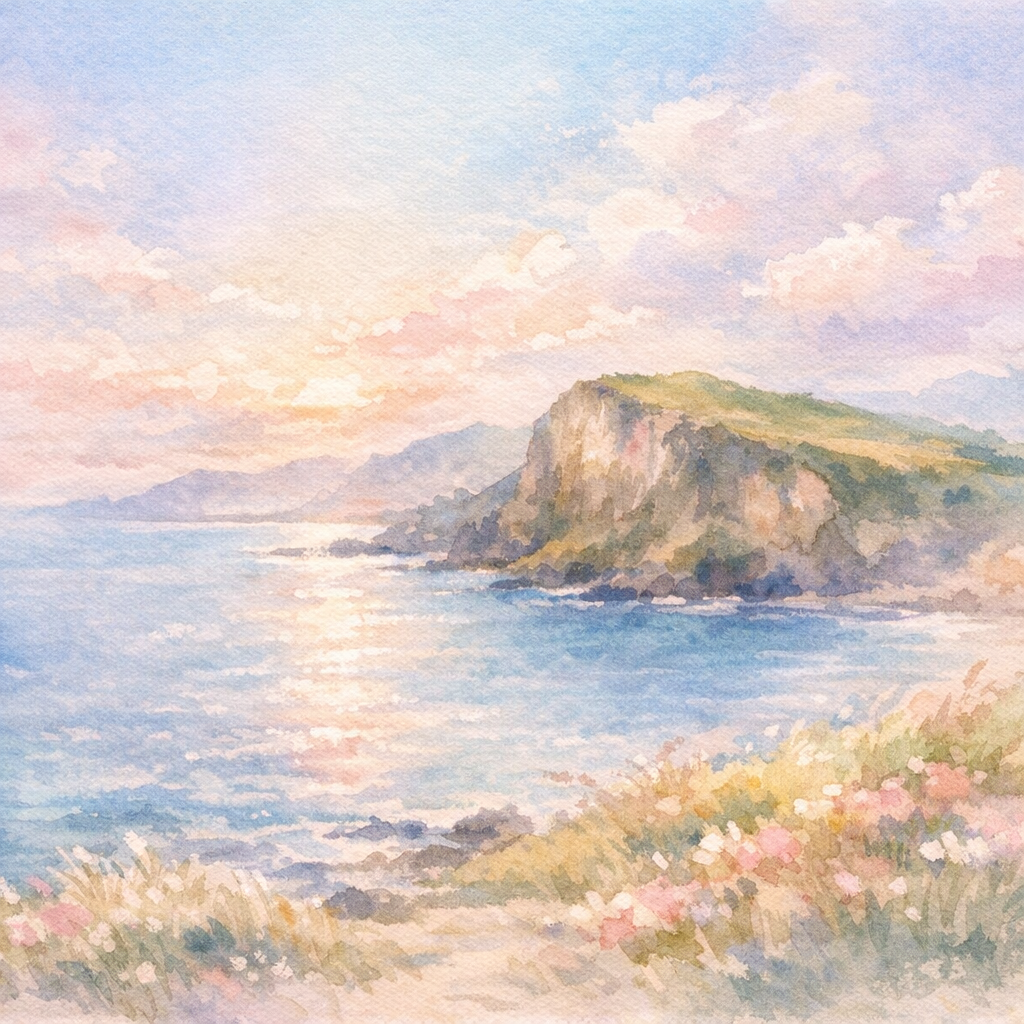
You know, I’ve been to Jeju enough times that my friends now ask me for food recommendations before they even book their flights. It’s become my little escape route from the usual office life — meetings, Slack messages, code reviews, the whole very glamorous IT worker package. And sure, Jeju has the big-name places everyone talks about. Hallasan Mountain, Seongsan Ilchulbong, Woljeongri Beach… all lovely, no argument there.
But if I’m being honest, the place I keep going back to is Suwolbong Peak on the west side of Jeju. It’s not loud. It doesn’t try too hard. There’s no “look at me, I’m famous” energy. And maybe that’s exactly why I like it so much.
Suwolbong Peak in Jeju is the kind of place where you walk slowly without meaning to. The wind comes in from the sea, the volcanic cliffs look almost unreal, and when the sunset starts dropping into the ocean… yeah, I know this sounds dramatic, but your brain gets quiet for a minute. For someone who spends weekdays staring at screens, that silence feels expensive. Like, premium subscription silence.
And if you’re into KPOP moods, K-drama-style scenery, or those emotional Korean travel moments where nothing huge happens but somehow your heart feels full, Suwolbong has that exact vibe. Not flashy idol-stage energy. More like walking alone with an IU song in your ears, pretending you’re in a slow travel film. Honestly, not a bad way to spend an afternoon.
Suwolbong Peak in Jeju: Quiet, Windy, and Weirdly Cinematic
Suwolbong Peak is a small volcanic hill, or more accurately a tuff cone, located in Hangyeong-myeon on the western edge of Jeju Island. If you’re the kind of traveler who likes big dramatic landscapes without sweating through your shirt, this place is very much your friend.
The walk up is gentle. Really gentle. I wouldn’t even call it a hike unless you’re trying to make your travel diary sound more heroic. From the parking area, it takes around 15 to 20 minutes to reach the viewpoint, depending on how often you stop to take photos, stare at the sea, or pretend you’re casually not out of breath. No hiking boots needed. Sneakers are totally fine.
What makes Suwolbong special, at least to me, is the combination of things. You get the open sea, the low grassy slopes, the rugged volcanic coastline, and Chagwido Island floating in the distance like it was placed there by a movie director who really understood composition. The whole scene has this soft, slightly lonely beauty. Not sad exactly. More like peaceful with a tiny bit of ache in it.
That’s why I always say Suwolbong has strong K-drama scenery energy. It’s the sort of place where a character would finally say what they’ve been holding back for 12 episodes. Or where someone would stand in the wind after a breakup, hair flying everywhere, looking gorgeous and emotionally destroyed. You know the scene.
The Suwolbong Geotrail Is More Than Just a Viewpoint
A lot of visitors just go up to the observation area, take sunset photos, and leave. That’s fine, no judgment. But if you have a little extra time, the Suwolbong Geotrail is worth walking. It runs along the coastal cliffs and shows off Jeju’s volcanic layers in a way that feels surprisingly alive.
I’m not a geology guy. I’m an IT guy. My daily life involves dashboards, databases, and pretending not to panic when a deployment behaves strangely. But even I found the rock layers here fascinating. You can actually see how Jeju was built by volcanic activity, layer by layer. It’s like looking at the island’s old source code, if that makes sense… maybe that’s too nerdy, but I stand by it.
The cliffs near Suwolbong show beautiful patterns formed by volcanic ash and eruptions from long ago. The colors shift depending on the light, and around golden hour they turn warm and almost painterly. If you enjoy photography, this is where you’ll probably start taking way too many pictures of rocks. It happens. Don’t fight it.
When to Visit Suwolbong Peak for the Best Sunset
If you only remember one thing from this whole rambling love letter to Suwolbong, remember this: don’t go at noon. Midday light in Jeju can be harsh, and Suwolbong deserves better than flat, bright lighting that makes everything look like a badly edited phone photo.
Go in the late afternoon. Around 4:30 PM to 5:00 PM is usually a sweet spot, though of course it depends on the season. In summer, you can go a bit later. In winter, don’t be lazy because the sun disappears early and Jeju does not wait for your schedule.
The best moment is when the sunlight starts sliding sideways across the fields and cliffs. The sea turns silver, then orange, then that deep blue color that makes people suddenly become philosophical. I’ve sat there more than once thinking, “Okay, maybe life is not just emails and tax documents.” Funny how a sunset can do that.
One time, after a particularly annoying work week, I drove out to Suwolbong with convenience store coffee and no real plan. I sat on the observation deck for almost an hour, just watching clouds move over the ocean. No laptop. No notifications. Just wind, water, and that strange Jeju calm. It sounds simple, but honestly, that was one of the most useful “wellness” moments I’ve had in years.
Small but Real Travel Tips from My Own Visits
- Bring a light jacket. Even when Jeju feels warm in town, the wind at Suwolbong can get cheeky. Especially near sunset.
- Wear comfortable shoes. You don’t need hiking gear, but don’t show up in slippery sandals if you plan to walk the geotrail.
- Check sunset time before you go. Sounds obvious, but I’ve seen people arrive just after the good light was gone. Painful.
- Renting a car makes life easier. Public transport in Jeju exists, yes, but the west coast is much smoother with your own wheels.
- Don’t rush off right after sunset. Stay 10 more minutes. The afterglow is often better than the actual sunset, seriously.
Getting to Suwolbong Peak Without Making Your Trip Complicated
Suwolbong Peak is located in Hangyeong-myeon, roughly 50 to 60 minutes by car from Jeju International Airport. If traffic is kind and your navigation app behaves, it’s an easy drive. The west side of Jeju is calmer than the airport area, and once you get away from the busier roads, the drive itself becomes part of the fun.
I usually rent a car in Jeju, especially when I’m exploring places like Suwolbong, Sinchang Windmill Coastal Road, or small seaside villages. I know some travelers don’t love driving abroad, and fair enough. But Jeju roads are generally manageable, and having a car gives you freedom to stop whenever the coast suddenly looks too pretty to ignore. Which happens a lot.
If you’re not driving, you can use a taxi. Just show the driver “Suwolbong Peak” or “수월봉” on your map app. For public transportation, buses can get you nearby, but schedules may not line up perfectly, and after sunset it can feel a bit inconvenient. Not impossible, just… a little puzzle-like. And personally, I prefer my puzzles in code, not while standing by a rural bus stop in the wind.
Entrance Fee and Time Needed
There is usually no major entrance fee for simply visiting the Suwolbong viewpoint area, though parking or nearby facilities can vary depending on local management and season. Always check recent information on Naver Map, Kakao Map, or Google Maps before going because Jeju sometimes changes small details quietly.
For time, I’d give it at least one hour. If you want to walk slowly, take photos, explore part of the geotrail, and enjoy the sunset properly, plan for two hours. If you’re like me and suddenly become emotionally attached to the horizon, maybe longer.
KPOP Vibes at Suwolbong: Not an Idol Landmark, But the Mood Is There
Let’s be real for a second. Suwolbong Peak is not one of those famous KPOP pilgrimage spots where a music video was filmed and fans line up to recreate exact poses. If that’s what you’re looking for, places in Seoul like HYBE area, YG’s neighborhood in Hapjeong, or certain cafes connected to idols might be more your thing.
But Suwolbong has a different kind of KPOP travel vibe. It feels like the emotional B-side track on an album. Not the title song with fireworks and choreography, but the song you play on a bus ride when the sky is turning pink and you suddenly remember someone you used to like. You get me?
For me, Suwolbong matches songs like IU’s soft acoustic tracks, AKMU’s seaside mood, DAY6’s bittersweet band sound, or even the reflective feeling of BTS’s “Spring Day”. Put on your earphones, walk slowly along the trail, and the place basically edits your life into a music video. No camera crew needed.
I’ve actually done this more than once. I’ll park, start a playlist, walk up without checking my phone too much, and by the time I reach the viewpoint, my mood has changed. Not magically fixed, nothing that dramatic. Just lighter. Sometimes that’s enough.
Best Playlist Mood for Suwolbong Peak
- For sunset: IU, AKMU, Paul Kim, 10CM, LeeHi
- For windy solo walks: DAY6, BTS ballads, NELL, Jannabi
- For soft travel videos: NewJeans slower tracks, Bolbbalgan4, Heize
- For that “main character in Jeju” feeling: anything acoustic, slightly nostalgic, and not too loud
And yes, you can absolutely film a short Reel or TikTok here. Just don’t block the path or stand too close to cliff edges for the shot. I know the sunset makes everyone brave, but gravity is still very committed to its job.
K-Drama and Korean Film Energy Around Western Jeju
If your Jeju trip is partly about Korean drama filming locations, Suwolbong works best as part of a western Jeju route rather than a single destination. The area has that wide-open, cinematic look that Korean directors love: sea roads, black volcanic rocks, quiet villages, and skies that change every five minutes.
Nearby, you can visit places that often feel very drama-like even when they aren’t tied to one specific scene. That’s something I’ve learned after traveling around Korea for years. Sometimes the famous filming location is crowded and oddly smaller than expected, while the random road nearby gives you the exact feeling you came for.
Nearby Spots That Pair Beautifully with Suwolbong
- Chagwido Island View — You can see it from Suwolbong, and boat tours may be available depending on weather. The island silhouette at sunset is ridiculously photogenic.
- Sinchang Windmill Coastal Road — About a short drive away, this road has wind turbines, ocean views, and a breezy “K-drama road trip” atmosphere.
- Hyeopjae Beach — White sand, blue water, and a much brighter beach vibe. Great earlier in the day before heading to Suwolbong for sunset.
- Geumneung Beach — Right near Hyeopjae, but a little softer and calmer depending on the day.
- Osulloc Tea Museum — Not right next door, but easy enough by car. Good for green tea desserts and a more polished Jeju stop.
If you want to build a nice day, I’d do Hyeopjae or Geumneung in the afternoon, coffee somewhere along the coast, then Suwolbong for sunset, and dinner nearby afterward. It’s not a packed itinerary, and that’s the point. Jeju is better when you leave some empty space in the day.
Where to Eat Near Suwolbong Peak: Local Food That Actually Feels Like Jeju
After walking around Suwolbong, you’ll probably want something warm and satisfying. The wind does that. Even if you weren’t hungry before, suddenly you start thinking very seriously about soup, grilled fish, or seafood noodles.
The villages around Hangyeong-myeon, Gosan-ri, and the western coastline have small local restaurants, seafood places, and simple diners. Some may not have English menus, but don’t let that scare you too much. In Jeju, the best meals often come from places that look plain from the outside.
Jeonbok-juk: Abalone Porridge After a Windy Walk
If you want something gentle but still very Jeju, look for jeonbok-juk, or abalone porridge. It’s creamy, savory, warm, and easy to eat after being out in the wind. Foreign visitors often like it because it’s not too spicy, and the flavor feels comforting rather than aggressive.
Abalone is a Jeju specialty, and while some famous restaurants can be expensive, smaller local places often serve lovely versions without making a big fuss. Search your map app for 전복죽 near Gosan or Hangyeong. Check recent reviews, especially photos, because restaurant quality can change. That’s not me being vague — that’s just Jeju reality.
Grilled Mackerel and Seafood Stew
If you’re hungrier, go for godeungeo-gui, grilled mackerel. Crispy skin, salty flesh, rice, soup, and a table full of banchan. That combo is dangerously good after sunset. It’s the kind of meal where you stop talking for a few minutes because everyone is busy eating.
Haemul-tang, Korean seafood stew, is another strong choice if you’re traveling with friends. It can be spicy, so ask before ordering if you don’t handle heat well. But on a windy Jeju evening, a bubbling pot of seafood stew feels almost too perfect. Like the island planned it.
Seafood Ramen and Casual Cafes
If you want something easier and more casual, look for haemul ramyeon, seafood ramen. It’s not fancy, but it hits the spot. Some cafes and small restaurants along the coast serve ramen with crab, shrimp, mussels, or abalone depending on the place. Is it always the most traditional meal? Maybe not. Do I still enjoy it while looking at the ocean? Absolutely.
There are also small cafes scattered around western Jeju, many with ocean views. Some are stylish, some are a little homemade, some feel like someone opened a cafe because they loved sunsets too much. I respect that life choice.
My Favorite Way to Spend Half a Day Around Suwolbong
If a friend were visiting Jeju for the first time and asked me how to fit Suwolbong into the trip, I wouldn’t tell them to rush there, snap a photo, and leave. That would be a waste. Suwolbong is better when you let the afternoon stretch a bit.
Here’s how I’d do it, in a relaxed way:
- Early afternoon: Visit Hyeopjae Beach or Geumneung Beach for bright blue water and easy photos.
- Mid-afternoon: Grab coffee somewhere along the western coast. Don’t overthink it. Pick a place with a nice view and decent reviews.
- Late afternoon: Drive to Suwolbong Peak and walk up slowly before golden hour.
- Sunset: Stay at the viewpoint or walk part of the geotrail. Take photos, but also put the phone down for a while.
- Evening: Eat abalone porridge, grilled fish, or seafood ramen nearby before heading back.
This kind of itinerary doesn’t look impressive on paper because it isn’t packed with ten stops. But honestly, that’s why it works. I’ve had trips where I checked off famous places all day and remembered almost nothing later. Then I’ve had days like this — coffee, wind, sunset, fish — and they stay in my head for years.
What Foreign Travelers Should Know Before Visiting
Suwolbong Peak is easygoing, but a few small things will make your visit smoother. Jeju is tourist-friendly, yes, but the western side can feel more local and less English-heavy than places like Jungmun or downtown Jeju City.
Language Tips
Save the Korean name 수월봉 on your phone. Taxi drivers and local restaurant owners will recognize that faster than English. For food, it helps to save a few keywords too:
- 전복죽 — abalone porridge
- 고등어구이 — grilled mackerel
- 해물라면 — seafood ramen
- 해물탕 — seafood stew
- 흑돼지 — Jeju black pork
Translation apps work pretty well these days, though menus with handwritten Korean can still make them act confused. When that happens, just use photo reviews on map apps. I do this all the time, even as a Korean speaker, because food photos don’t lie as much as menu descriptions do.
Weather and Wind
Jeju weather changes quickly. Like, weirdly quickly. You can leave your hotel under blue skies and arrive at the coast with clouds rolling in like a drama villain. Check the forecast, but don’t trust it completely. Bring layers and be flexible.
Wind is part of the Suwolbong experience. It’s beautiful, but it can be strong. If you’re wearing a hat, hold onto it. If you’re setting up a tripod, don’t walk away from it like you’re in a calm studio. The Jeju wind has opinions.
Photography Tips
For photos, golden hour is your best friend. Shoot toward the sea for silhouettes, or turn around and capture the warm light hitting the hills. If you’re taking portraits, don’t stand directly facing the wind unless you want your hair to become the main character.
A phone camera is enough here. Really. Of course, if you have a proper camera, bring it, but Suwolbong doesn’t require fancy gear. The landscape does most of the work. Your job is mostly not to drop your phone while being emotionally moved by the sunset.
Why Suwolbong Peak Stays With Me
There are places that impress you right away, and there are places that quietly follow you home. Suwolbong Peak in Jeju is the second kind for me.
It doesn’t scream for attention. It doesn’t need a giant landmark or a complicated story. You walk up, the wind hits your face, the sea opens in front of you, and for a while things feel simpler. Maybe that’s why I keep recommending it to people who tell me they want a more peaceful Jeju trip.
If you’re coming to Korea for KPOP culture, Korean drama scenery, or just a soft, beautiful travel day that doesn’t feel like a checklist, Suwolbong is worth your time. Bring your favorite playlist. Bring a light jacket. Bring a little patience for the wind.
And please, don’t just take a selfie and run away. Sit for a bit. Watch the light change. Let the place do its thing.
Some travel spots are famous because everyone posts them. Suwolbong, to me, is special because after you leave, you keep thinking about it quietly. That’s a different kind of famous, maybe the better kind...
댓글
댓글 쓰기