Sangumburi Crater in Jeju: A Quiet K-Drama-Worthy Spot with Big Wind, Big Views, and Surprisingly Good Food Nearby
So, you’re thinking about Jeju Island. Nice. Very nice.
Most people land in Jeju and immediately talk about Hallasan Mountain, Seongsan Ilchulbong, beach cafés, black pork streets, and all the classic stuff. I get it. Those places are famous for a reason. But if you ask me, there’s one place that feels a little less loud, a little more poetic, and honestly… more “Jeju” in a quiet way.
I’m talking about Sangumburi Crater.
At first glance, it may not sound exciting. A crater? A field? Some walking paths? Yeah, I know. If someone described it like that to me, I’d probably check the Wi-Fi speed at my hotel and stay in a café instead. I’m a 40-something IT guy, so my idea of comfort is usually a stable internet connection, decent coffee, and not having to climb 800 stairs for a view.
But Sangumburi is different. It doesn’t shout at you. It just sits there, wide and calm, with this huge open sky above it. And somehow, after ten minutes, you start walking slower. You stop checking your phone. You look around and think, “Ah… okay. This is why people love Jeju.”
Why Sangumburi Crater Feels So Special in Jeju
Sangumburi Crater is a volcanic crater located in the eastern part of Jeju Island, not too far from places like Seongeup Folk Village and Jeju Stone Park. The interesting thing is that it’s not the kind of crater where you need to hike aggressively and question your life choices halfway up.
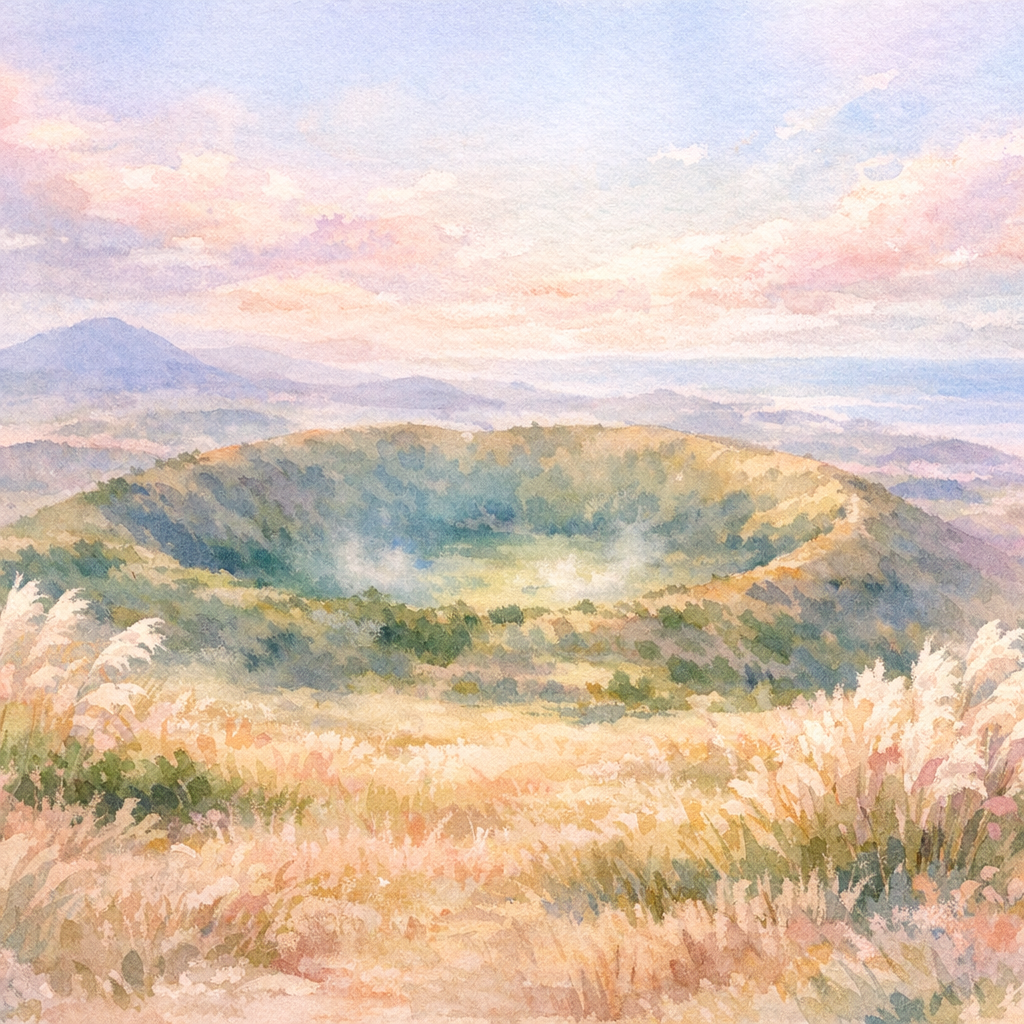
The walking route is gentle. Very manageable. You follow the path, look down into the crater, and enjoy this big natural bowl covered with grass, trees, and seasonal plants. It feels open but also strangely private, like nature made a secret stadium and forgot to sell tickets to too many people.
What I personally like about Sangumburi is that it gives you that classic Jeju volcanic landscape without making you work too hard. Some Jeju spots are beautiful but exhausting. Sangumburi is beautiful and kind to your knees. At my age, I respect that deeply.
The view changes depending on the season
Sangumburi isn’t one of those places that looks exactly the same all year. That’s part of the charm.
- Spring: fresh green grass, softer weather, and that clean Jeju air that makes you feel healthier than you actually are.
- Summer: everything gets greener and brighter, though the sun can be pretty intense, so bring water and a hat.
- Autumn: probably the most photogenic season, especially when the silver grass starts moving in the wind. It’s ridiculously pretty.
- Winter: quieter, colder, and a bit lonely in a good way. If the sky is clear, the views can feel almost cinematic.
Autumn gets the most attention because of the silver grass at Sangumburi. When the wind passes through those pale golden fields, the whole place looks like a scene from a music video. Not the loud kind with lasers and motorcycles. More like the emotional ballad part where someone is looking into the distance, thinking about a breakup that happened three years ago but still hurts for no reason...
A K-Drama and KPOP-Friendly Jeju Spot, Without the Chaos
Now, if you love Korean dramas, Korean movies, or KPOP travel content, Sangumburi has exactly the kind of atmosphere you probably came to Korea for.
Jeju Island itself has been used again and again for dramas, films, variety shows, idol photo shoots, and “healing trip” episodes. You know the type. A celebrity gets sent to Jeju, walks through a windy field, eats something local, then suddenly says something meaningful about life. I used to laugh at those scenes a bit, but after visiting Sangumburi, I kind of understand. The wind really does make you reflective. Or maybe I was just tired.
Sangumburi Crater is often loved by visitors because it feels ready-made for a K-drama scene. Long walking paths, soft grass, wide skies, a slightly dramatic breeze… honestly, you don’t need much imagination. Stand there for five minutes and you’ll understand why Korean directors and travel show producers keep coming back to Jeju’s open landscapes.
For KPOP fans visiting Jeju, this is also a nice break from the usual checklist travel. It’s not a place where you go because there’s a giant poster of an idol on the wall. It’s more subtle than that. Sangumburi gives you the kind of background you often see in idol variety shows or photo shoots: natural, calm, slightly dreamy, and very Korean in its own quiet way.
Bring your camera, but don’t just chase photos. I mean, yes, take the photos. The place is too pretty not to. But after that, put the phone down for a bit. Walk. Listen to the wind. If you have a favorite K-drama OST or KPOP playlist, this is the right place to use it. Not too loud though. Let Jeju do some of the work.
My Own Visit: Cloudy Sky, Strong Wind, Zero Regrets
I went to Sangumburi on a cloudy day, which sounds like bad timing, right? Actually, no. It turned out to be perfect.
The clouds made the crater look moodier, almost like a fantasy movie set. Not bright and postcard-pretty, but deeper. A little mysterious. I remember standing near the rim and thinking, “Okay, this is not the Jeju from the tourist brochures. This is better.”
I made one classic mistake, though. I walked too fast at the beginning because the path looked easy. Very office-worker behavior. You see a route, you optimize it. But Sangumburi is not a task to complete. It’s a place to slow down. My honest tip? Don’t rush the loop. Find a bench, sit for five minutes, and just look at the crater without trying to do anything productive. It sounds simple, but it genuinely changes the visit.
Also, the wind at Sangumburi is not a cute little breeze. It can be strong, even when the weather looks mild. I visited in a basic T-shirt and acted brave for about seven minutes. Then I regretted every life decision that led me there. Bring a light jacket or windbreaker, even in warmer months. Future you will be grateful.
How to Enjoy Sangumburi Without Overplanning
You don’t need a complicated plan for Sangumburi. That’s one of the reasons I like it. Some tourist attractions require reservations, strategy, timing, backup timing, and the emotional strength to stand in lines. Sangumburi is much easier.
How much time should you spend there?
Most people spend around 40 minutes to 1.5 hours at Sangumburi. If you only want to walk, take photos, and leave, 40 minutes is enough. But if you’re like me and you enjoy wandering slowly while pretending you’re in a drama scene, give yourself at least an hour.
The walking path isn’t difficult. You don’t need hiking boots unless you just like wearing them. Comfortable sneakers are fine. If it rained recently, some areas may feel a bit damp, so white shoes are a risky fashion choice. They look great in photos for five minutes, then reality happens.
Best time to visit
Late afternoon is my favorite time. The light gets softer, shadows stretch across the grass, and the whole crater feels warmer somehow. Sunset can be beautiful too, but check the closing time before you get too romantic about it. Jeju attractions don’t always wait for your perfect Instagram moment.
Morning is also lovely if you want fewer people. The air feels crisp, and tour buses usually haven’t fully arrived yet. If you’re driving around eastern Jeju, Sangumburi works nicely with nearby stops like Seongeup Folk Village, Jeju Stone Park, or Bijarim Forest.
Getting there
The easiest way is by rental car. I know, not everyone wants to drive in Korea, and that’s fair. But Jeju is one of those places where having a car really changes the trip. Public transportation exists, but buses can take time, and the intervals may not match your mood.
- By rental car: the most convenient option, especially if you’re visiting multiple eastern Jeju attractions in one day.
- By taxi: possible, but ask your hotel or use a taxi app to avoid getting stuck when leaving.
- By bus: doable, though you should check the latest route and schedule on Naver Map or KakaoMap.
Small practical thing from my own trip: don’t rely only on Google Maps in Korea. It’s okay for general searching, but for navigation, Naver Map or KakaoMap is much better. As an IT person, I hate admitting when an app workflow is region-specific, but in Korea, it really is.
What to Eat Near Sangumburi: Foreigner-Friendly Jeju Food Ideas
After walking around in the wind, food tastes better. That’s just science. Or maybe hunger. Either way, the area around Sangumburi isn’t packed with trendy restaurants like Jeju City or Seogwipo, but there are some very good local options nearby if you know what to look for.
For foreign travelers, I’d focus on dishes that are easy to enjoy, not too intimidating, and genuinely connected to Jeju. You came all the way here. Might as well eat like it.
Jeju black pork barbecue
Jeju black pork is the obvious choice, and honestly, it deserves the hype. The pork is usually grilled at the table, then wrapped in lettuce with garlic, ssamjang sauce, and sometimes pickled vegetables. It’s smoky, rich, and very satisfying after a windy outdoor walk.
You can find black pork restaurants in several areas, but if you’re driving from Sangumburi toward Jeju City or Seogwipo, it’s easy to search nearby on Naver Map. Look for places with photos on the menu if you’re nervous about ordering. Many restaurants in tourist areas are used to foreign guests now, so even if English is limited, pointing and smiling still works surprisingly well.
Gogi-guksu, Jeju-style pork noodle soup
If barbecue feels like too much, try gogi-guksu, which is Jeju-style pork noodle soup. It’s warm, comforting, and simple in the best possible way. Thick noodles, pork slices, savory broth… nothing too fancy, but it hits the spot.
This is the kind of food I like after sightseeing because it doesn’t demand too much from you. You sit down, eat, warm up, and suddenly your energy comes back. If the weather at Sangumburi was windy or cold, gogi-guksu is a great call.
Abalone porridge for a softer local meal
Abalone porridge, or jeonbokjuk, is another Jeju favorite. It’s mild, warm, and easy on the stomach. Some travelers expect Korean food to be spicy all the time, but Jeju has plenty of gentle dishes too, and this is one of the best.
If you’re traveling with parents, kids, or someone who isn’t into spicy food, abalone porridge is a safe and local option. It also feels very “island,” which I like. You’re in Jeju, surrounded by sea and volcanic land. Eating seafood porridge just makes sense.
Markets and snacks if you’re heading toward Seogwipo
If your route takes you toward Seogwipo, Seogwipo Maeil Olle Market is a fun stop. It’s tourist-friendly but still local enough to feel alive. You can try street snacks, fresh tangerine juice, seafood bites, fried foods, and sweet hotteok, that chewy pancake filled with syrupy goodness.
I wouldn’t call it peaceful. It’s a market, so it’s busy and a bit chaotic. But after the calm of Sangumburi, that contrast can be fun. Nature in the afternoon, market snacks in the evening. Not a bad Jeju day at all.
Simple Travel Tips Before You Go
Sangumburi is easy to enjoy, but a few small things make the visit much better. Nothing dramatic. Just the kind of stuff you only remember after you’ve already messed it up once.
- Bring a windbreaker: even when the weather looks calm, the open landscape can get windy.
- Wear comfortable shoes: the path is not hard, but you’ll enjoy it more if your feet aren’t complaining.
- Check the weather: cloudy days can still be beautiful, but heavy rain will make the visit less fun.
- Use Naver Map or KakaoMap: especially for driving routes, bus schedules, and restaurant searches.
- Don’t rush your visit: Sangumburi is not about speed. It’s about space, wind, and that weird peaceful feeling you didn’t know you needed.
One more thing: if you’re planning to visit during peak autumn silver grass season, expect more people. It still won’t feel as intense as some of Jeju’s superstar attractions, but it won’t be empty either. Go earlier in the day if you want cleaner photos and fewer people drifting into your background like unpaid extras.
Why I’d Recommend Sangumburi to a Friend Visiting Jeju
Some places impress you right away. Big cliffs, blue water, dramatic sunrise, boom. Easy.
Sangumburi Crater is quieter than that. It kind of sneaks up on you. You walk in thinking, “Okay, nice field.” Then the wind moves through the grass, the crater opens up in front of you, and suddenly you’re standing there longer than planned.
For foreign travelers who love Jeju nature, K-drama-style scenery, or soft, cinematic places that don’t feel overly commercial, Sangumburi is absolutely worth adding to the itinerary. It’s especially good if you want a break from crowded cafés and major landmarks. Not every travel memory has to be loud. Some of the best ones are just you, a path, a strange amount of wind, and a view that makes you go quiet for a minute.
So yeah, go to Sangumburi. Walk slowly. Take the photo, sure. Then put the phone away. Let the place breathe a little.
And after that, please eat Jeju black pork or a warm bowl of gogi-guksu. I’m not saying it will fix all your problems, but honestly… it won’t hurt.
댓글
댓글 쓰기