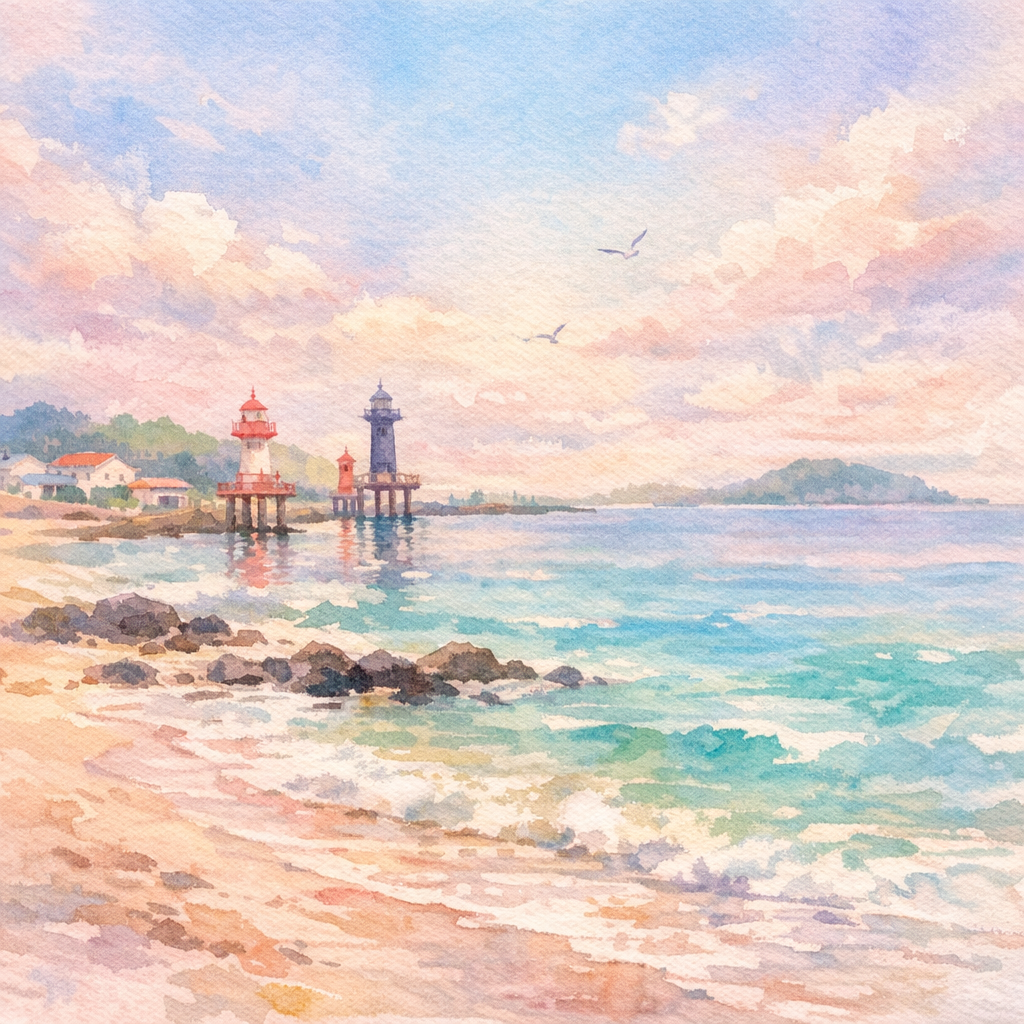
Okay, if you’re planning a trip to Jeju Island and your search history is already full of Hamdeok Beach, Hyeopjae Beach, Seongsan Ilchulbong, and “best black pork in Jeju”… I get it. Totally normal behavior. But let me nudge you toward one beach that feels a little less obvious and, honestly, a little more cinematic: Iho Tewoo Beach.
It’s close to Jeju City, so you don’t need to spend half your day sitting in a rental car. That alone is a big win for me. I’m in my 40s, I work in IT, and maybe this is just me getting older, but I’ve become very picky about travel routes that waste energy for no good reason. Iho Tewoo is easy, pretty, and weirdly memorable. Not “perfect postcard” pretty. More like, “Wait, why does this place feel like it belongs in a music video?” kind of pretty.
The beach has black volcanic rocks, clear blue water, and two famous horse-shaped lighthouses, one red and one white, standing at the end of the breakwater. They’re cute, but not in a childish way. More like Jeju saying, “Yes, we have drama. But we also have horses.” And somehow it works.
So if you’re a foreign traveler who wants a Jeju beach with an easy route, strong photo spots, a bit of K-Drama mood, and nearby seafood that doesn’t feel like a tourist trap, this is a place I’d seriously put on the list.
Why Iho Tewoo Beach Feels Different from Other Jeju Beaches
Let’s be honest. A lot of beaches in Jeju are beautiful. That’s not exactly breaking news. But Iho Tewoo Beach has a different personality. It doesn’t try too hard to be soft and dreamy. The sand is darker, the rocks are rough, and the coastline has this slightly wild feeling, even though you’re still very close to the city.
That contrast is the whole charm. On one side, you’ve got the sea glowing turquoise when the weather behaves. On the other side, the basalt rocks sit there like they’ve been burned into the land. Because, well, in a way they have. Jeju is a volcanic island, and Iho Tewoo doesn’t hide that origin. It shows it off.
And then there are the lighthouses. People often call them just red and white lighthouses, but they’re actually shaped like Jeju horses. That little detail matters. Jeju horses are part of the island’s identity, and these lighthouses have become one of the most recognizable photo spots near Jeju City.
Here’s what I personally like about the place: it doesn’t feel like a beach designed only for tourists. You’ll see couples taking photos, families walking around, locals exercising, people sitting quietly in their cars with coffee, and yes, travelers doing the very serious business of finding the best angle for Instagram. It’s a mix. A nice one.
Best photo spots at Iho Tewoo Beach
- The red horse lighthouse: This one pops beautifully against the blue sea, especially when the sky is clear.
- The white horse lighthouse: A little calmer in mood, and it looks lovely around sunset.
- The black volcanic breakwater: Great for dramatic photos, but wear shoes with grip. The rocks are not your friend if you’re careless.
- The shoreline facing the lighthouses: Good if you want both lighthouses in the frame without walking too far.
- Sunset view near the beach cafes: If you’re tired, just grab coffee and let the sky do the work.
Small warning, though. The breakwater is uneven, and those volcanic stones can be rough. I’ve seen people trying to walk there in flimsy sandals, and every step looked like a personal crisis. Sneakers are better. Not glamorous, maybe, but your ankles will thank you.
The K-Drama and K-Pop Mood: Not Loud, But Definitely There
If you’re coming to Korea partly because of K-Dramas, K-Pop, or Korean variety shows, Iho Tewoo Beach has that familiar screen-like feeling. You know those scenes where two people walk beside the sea, the wind is slightly too perfect, and nobody says what they actually mean? This beach has that energy.
I won’t pretend every famous idol group has filmed a legendary music video right here, because honestly, that’s how misinformation spreads on travel blogs. But Iho Tewoo Beach absolutely has the look that Korean production teams love: strong color contrast, a recognizable landmark, open sky, and that Jeju-specific texture you can’t fake in a studio.
If you watch a lot of Korean travel vlogs, idol vacation content, or variety shows filmed in Jeju, this kind of scenery will feel instantly familiar. The red and white horse lighthouses especially have that “album jacket behind-the-scenes” vibe. Even if you’re not recreating a specific scene, you can easily create your own K-Drama-style Jeju photo here.
Actually, that’s part of why I like it. Some places become famous because one drama scene went viral. Other places feel cinematic even without needing a name tag. Iho Tewoo is the second type. It’s not screaming, “Look at me, I was in episode 12!” It’s more like, “Stand here for five minutes and you’ll understand.”
How to take K-Drama-style photos here without overthinking it
- Go during golden hour, about one hour before sunset. The rocks look deeper, the water looks softer, and faces look better. Simple magic.
- Use the horse lighthouse as a background, but don’t stand too close. Give the frame some breathing room.
- Bring a light jacket or shirt. Jeju wind can turn a normal outfit into a dramatic scene whether you planned it or not.
- Try walking shots on the beach instead of only posing. They look more natural, and honestly, less awkward.
- If you’re a K-Pop fan, shoot short vertical clips here. The colors work really well for reels, shorts, and travel edits.
One tiny tip from my own visit: my phone battery dropped faster than expected because I kept taking photos and checking maps at the same time. Very IT guy problem, I know. Bring a small power bank, especially if you’re going in the evening and still need to call a taxi or navigate back to your hotel.
What to Actually Do at Iho Tewoo Beach
A beach can be beautiful, sure. But after ten minutes of taking photos, then what? This is where Iho Tewoo Beach works pretty well, because it gives you a few different ways to enjoy it without needing a full-day plan.
You can walk along the shore, stroll toward the lighthouses, sit near the black rocks, watch planes coming and going from nearby Jeju International Airport, or just grab a drink and do nothing. That last one is underrated. People try to optimize travel too much. I say this as someone who literally optimizes systems for a living. Sometimes the best travel moment is sitting quietly with a coffee, not checking your schedule, and letting the sea make the decisions for a while.
Walk to the horse lighthouses
The lighthouses are the main landmark, and yes, they’re worth seeing up close. The red horse lighthouse and white horse lighthouse stand on the breakwater like a pair of cheerful guardians. The walk isn’t difficult, but the surface can be uneven depending on where you step, so don’t rush it.
When you reach the end, turn around and look back toward the coast. You get the beach, the city, and sometimes Hallasan Mountain in the distance if the weather is clear. It’s one of those views that doesn’t shout, but it stays with you.
Watch the water around the volcanic rocks
The sea around the rocks is surprisingly clear on calm days. You can see the texture under the water, and the waves make that low, hollow sound when they hit the stone. I don’t know, maybe I’m romanticizing it a bit, but it feels very Jeju. Raw, clean, slightly moody.
Swimming is possible in the beach area during the warmer months, but be careful around rocky sections. The water can get rough, and the rocks are sharp. If you’re traveling with kids or you’re not a strong swimmer, stay in the safer sandy areas and follow local signs.
Look for local Haenyeo culture
Depending on the time and season, you might spot Haenyeo, Jeju’s traditional female divers, working near the shore. They dive without modern scuba equipment and collect seafood like sea urchin, abalone, and shellfish. It’s not a performance. It’s real work, and it’s part of Jeju’s living culture.
I once arrived early in the morning, around 7:30, mostly because I had jet lag and gave up pretending I could sleep. That turned out to be a lucky accident. The beach was quiet, the light was soft, and I saw a couple of divers coming back from the water. It felt more memorable than any planned attraction I had saved on my map.
Nearby Food: What to Eat Around Iho Tewoo Beach
Now we’re getting to the important part. Food. Because after sea air, walking on rocks, and pretending you’re in a K-Drama, hunger arrives fast.
The area around Iho Tewoo Beach has plenty of small restaurants, seafood places, casual Korean eateries, and cafes. It’s not as polished as some resort areas, but that’s not a bad thing. Actually, I prefer it. You get more local flavor, and the prices can be more reasonable if you don’t just walk into the fanciest-looking place on the main road.
Seafood noodle soup: Haemul Kalguksu
If you like warm, comforting food, look for Haemul Kalguksu, which is seafood knife-cut noodle soup. The broth is usually made with clams, shrimp, crab, or other seafood, and the noodles are thick and soft. After a windy beach walk, this stuff hits differently.
For foreign visitors, this is a pretty safe choice. It’s flavorful but not usually too spicy, and it feels familiar enough if you like noodle soups. Add some kimchi on the side, and suddenly you understand why Koreans take soup seriously.
Abalone porridge: Jeonbok Juk
Jeonbok Juk, or abalone porridge, is another Jeju classic. It’s gentle, savory, and rich without being heavy. I know “porridge” doesn’t sound exciting to everyone, but trust me, this is not sad hospital food. Good abalone porridge tastes like the ocean decided to become comfort food.
This is also a nice option if your stomach is tired from too much fried food, spicy food, or convenience store snacks. No judgment. We’ve all had those travel days.
Grilled mackerel: Godeungeo Gui
If you want a proper Korean meal, try Godeungeo Gui, grilled mackerel. Jeju mackerel is known for being oily in the best way, with crispy skin and soft, salty flesh. Usually it comes with rice, soup, and a bunch of banchan, those small Korean side dishes that somehow make the table feel generous.
Foreign travelers sometimes worry about fish bones, and fair enough. Korean grilled fish often comes whole or in big pieces, so eat slowly and don’t attack it like a burger. It’s worth the effort.
Black pork if you want something heartier
Jeju is famous for black pork, and while the most famous restaurants are spread around the island, you can still find pork BBQ places not too far from the Iho area or back toward Jeju City. If you’re traveling with friends, black pork BBQ after sunset is a great move. The smoky grill, cold beer, and sea air still in your hair… yeah, that’s a good night.
If you don’t eat pork, no problem. Seafood is the easier choice near Iho Tewoo anyway.
Cafes Near Iho Tewoo Beach: Coffee, Dessert, and Sunset Seats
Jeju does cafes really well. Sometimes too well, if we’re being honest. You go in for one coffee and come out with 40 photos, a slice of cake, and a slightly confused feeling about how you spent that much money. But near Iho Tewoo Beach, a cafe stop makes sense.
There are cafes around the beach road where you can sit with a view of the water or the lighthouses. Some have rooftop seats, some have big windows, and some are just simple local coffee spots. I usually choose based on the view and whether the chairs look comfortable. At my age, chair quality matters. Deeply.
Good things to order in Jeju cafes include:
- Iced Americano: The standard Korean travel fuel. Cheap-ish, reliable, and everywhere.
- Hallabong ade: A sweet citrus drink made with Jeju’s famous mandarin-like fruit.
- Peanut latte: More common in some Jeju cafe areas, but if you see it, try it.
- Carrot cake or citrus desserts: Jeju uses local produce in desserts more often than you’d expect.
My realistic tip? If sunset is your goal, don’t arrive at the cafe exactly at sunset. Everyone else has the same idea. Get there 30 to 45 minutes earlier, order something, claim a decent seat, and relax. Travel is nicer when you’re not fighting strangers for a window table.
How to Get to Iho Tewoo Beach
One of the best things about Iho Tewoo Beach in Jeju is how easy it is compared with many other scenic spots on the island. It’s located west of Jeju City and not far from Jeju International Airport, so it works well on your first day, last day, or any day when you don’t want a complicated schedule.
By taxi
A taxi from Jeju International Airport to Iho Tewoo Beach is usually quick, depending on traffic. This is probably the easiest option if you have luggage or if you’re traveling with family. Show the driver “Iho Tewoo Beach” in your map app, and you should be fine.
By rental car
If you’re renting a car in Jeju, Iho Tewoo is a very simple stop. Parking is available near the beach, though it can get busier in summer and around sunset. As always in Jeju, don’t leave valuables visible in the car. Not because Jeju feels dangerous, but because basic travel common sense is never out of fashion.
By bus
Public buses can get you close, but bus timing in Jeju can feel a little slower than in Seoul or Busan. If you’re not in a rush and you like budget travel, it’s doable. Just check your route with Naver Map or KakaoMap, because Google Maps can be a bit limited for Korean public transportation.
Best Time to Visit Iho Tewoo Beach
You can visit Iho Tewoo Beach all year, but the mood changes a lot depending on the season and time of day.
Morning
Morning is quiet and local. The light is gentle, the beach is less crowded, and if you’re lucky, you might see fishing activity or Haenyeo near the water. It’s good for people who hate crowds or want a slower start.
Afternoon
Afternoon is better if you want bright blue water in your photos. The sea color usually looks stronger when the sun is high. Summer afternoons can be hot, though, so bring sunscreen, sunglasses, and water.
Sunset
Sunset is the most photogenic time. The lighthouses, black rocks, and sea all soften under warm light. This is when the beach feels most like a drama scene, especially if the wind is behaving in a poetic way instead of attacking your hair from all directions.
If I had to choose only one time, I’d go about an hour before sunset. Walk first, take photos, then find dinner nearby. That rhythm feels right.
Simple Half-Day Route Around Iho Tewoo Beach
If you don’t want to over-plan, here’s a very easy route. Nothing fancy, just the kind of schedule I’d send to a friend who says, “I have one free afternoon near Jeju City, what should I do?”
- 3:30 PM: Arrive at Iho Tewoo Beach and walk along the shore.
- 4:00 PM: Head toward the red and white horse lighthouses for photos.
- 5:00 PM: Grab coffee or Hallabong ade at a nearby cafe.
- 6:00 PM: Watch sunset from the beach or cafe terrace.
- 7:00 PM: Eat seafood noodle soup, abalone porridge, grilled mackerel, or black pork nearby.
- 8:30 PM: Take a taxi back to your hotel in Jeju City.
That’s enough. You don’t need to squeeze in five more attractions just because the internet told you to maximize your day. Jeju is better when you leave some empty space.
Practical Tips for Foreign Travelers
A few small things can make your visit easier, especially if it’s your first time in Jeju.
- Use Naver Map or KakaoMap: They work better than Google Maps for local routes, restaurants, and bus information in Korea.
- Bring a power bank: Between photos, maps, translation apps, and taxi apps, your battery will disappear faster than expected.
- Wear proper shoes: The volcanic rocks are uneven. Nice photos are not worth a twisted ankle.
- Carry a light jacket: Jeju wind can be surprisingly strong, even when the weather looks warm.
- Check restaurant hours: Some local places close between lunch and dinner or shut early if ingredients sell out.
- Learn a few food words: Haemul means seafood, jeonbok means abalone, godeungeo means mackerel, and heuk-dwaeji means black pork.
One more real-world tip: if a restaurant has no English menu, don’t panic. Use a translation app, point at photos, or ask for the popular dish by saying “recommendation” in simple English. In smaller Jeju restaurants, people are often kinder than the menu is readable.
Is Iho Tewoo Beach Worth Visiting?
Yes. Especially if you’re staying in Jeju City or arriving through Jeju International Airport. Iho Tewoo Beach is not the biggest beach in Jeju, and it’s not the most remote. But it has something many famous spots lose after becoming too polished: character.
The black lava rocks make it feel grounded. The horse lighthouses make it playful. The sea gives it that soft Jeju glow. And the nearby food scene means you can turn a simple beach stop into a proper travel memory without trying too hard.
For K-Pop fans, it’s a great place to shoot your own idol-style travel clips. For K-Drama lovers, it has that quiet emotional mood that feels like something important could happen at any second. And for regular travelers who just want a beautiful, easy, tasty Jeju stop? It works for you too.
Honestly, Iho Tewoo Beach is the kind of place I like more after leaving. While you’re there, it’s pleasant. Afterward, when you’re scrolling through your photos in the hotel room, you realize, “Oh, that place had a vibe.” And in Jeju, vibe matters. Sometimes more than the checklist.
댓글
댓글 쓰기