작성자:
Iros
- 공유 링크 만들기
- X
- 이메일
- 기타 앱
Let me get this out first. I have been to Jeju a handful of times, and somehow I kept pushing Yongmeori Coast to “next time.” You know how it is. You make a list, you rent a car, you stop for coffee, someone says, “Oh, let’s just go to that famous café,” and suddenly the day is gone.
Big mistake, honestly.
I finally went to Yongmeori Coast on my last Jeju trip, almost by accident, and it gave me that rare travel feeling I still chase even in my 40s. Not just “oh, nice view.” More like… wait, why did nobody force me to come here earlier? It looks wild, old, dramatic, and strangely calming at the same time. Like Jeju decided to show its real face for a moment, not the postcard version.
If you are visiting Jeju Island for the first time, or if you are into Korean drama filming locations, ocean walks, volcanic landscapes, seafood, and places that look painfully good in photos, put this spot on your route. Seriously. Just don’t show up without checking the tide. I did that once and stood there like a confused office worker staring at a server error log...
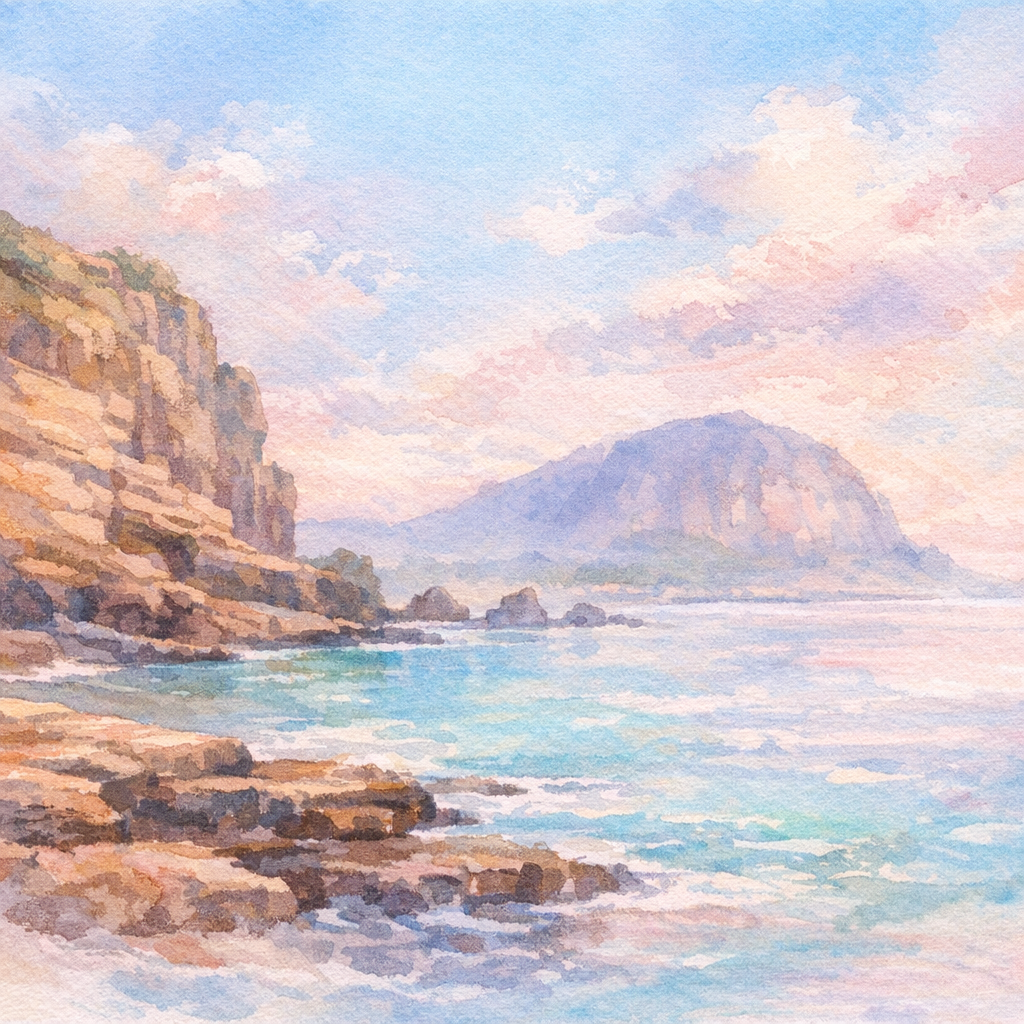
Yongmeori Coast sits on the southwestern side of Jeju Island, near Sanbangsan Mountain and Sagye-ri. The name means “dragon head,” and yeah, that sounds a bit dramatic at first. But once you see the coastline stretching out into the sea, the name makes sense. The cliffs and rocks look like the head of some ancient creature lying down by the water.
What makes this place special is the shape of the rocks. They are not smooth, pretty beach rocks. They are layered, twisted, cracked, and stacked like an old stone book. You can literally see time in the walls. Volcanic ash and sediment piled up ages ago, the sea carved through it, the wind did its thing, and now we get to walk through this strange natural gallery.
And the best part? You are not just looking at it from far away. When the weather and tide allow, you can walk along the bottom of the cliffs, right beside the ocean. Waves crash close enough to make you pause for a second. The rocks feel huge. You feel small. In a good way.
I know that sounds a little sentimental, but there is something about this place. Maybe it is the sound of the water echoing between the rock walls. Maybe it is the rough texture of the cliffs. Maybe I was just tired from driving around Jeju and needed one quiet moment. Whatever it was, Yongmeori Coast hit differently.
The coastal walking path is around the base of the cliffs, and depending on the open section, you can wander past wave-cut rock formations, layered stone walls, shallow pools, and views of the open sea. Some corners feel almost like a movie set. Not the polished studio kind. More like the place where a fantasy drama would send the main character when they need to think about destiny or heartbreak or both.
There are sections where the rock layers curve and bend in ways that look almost designed. But that is the funny thing about Jeju. Nature here has better design taste than most humans. As an IT guy, I spend too much time looking at screens, dashboards, code, alerts, and little blinking things that want attention. So when I see a place like this, my brain kind of shuts up for once. Nice feature. Highly recommended.
Here is the practical bit you really should not ignore: Yongmeori Coast may close depending on the tide, waves, wind, and weather conditions. This is not one of those places where you can always walk in whenever you feel like it. If the sea is rough or the tide is high, the coastal path can be closed for safety.
I learned this in the least glamorous way. On one earlier Jeju trip, I drove all the way down after lunch, feeling pretty proud of my “flexible itinerary,” only to find out the walking path was closed because of the tide. I just stood near the entrance with my coffee, pretending I had planned to enjoy the view from above. I had not. So yeah, please check before you go.
The easiest way is to call the local visitor information center, ask your hotel, or check recent local updates before heading out. If you are already nearby, the ticket booth area usually has information about whether entry is possible. Do not just trust your map app and vibes. Vibes are nice. Tides do not care.
Personally, I like mornings. Not painfully early, but early enough to beat the tour buses and the selfie-stick crowd. Around 8:30 or 9:00 AM can be lovely if the tide works out. The light is softer, the air feels cleaner, and you may actually hear the waves instead of twenty people discussing where to take the next group photo.
Late afternoon can also be beautiful, especially when the light starts warming up around Sanbangsan Mountain. But again, tide first. Sunset dreams are great, but if the path is closed, you will be admiring it from a distance. Which is still nice, just not the same.
If you love Korean dramas, Yongmeori Coast has the kind of scenery that feels instantly familiar. Even if you cannot name the exact episode or scene, the mood is very K-drama: dramatic coastline, wind in the hair, ocean behind the characters, someone probably carrying emotional baggage. You know the vibe.
Jeju Island has been used in countless Korean dramas, films, variety shows, and travel programs, and the area around Sanbangsan Mountain and Yongmeori Coast is one of those places that naturally looks made for the camera. The rock formations are strong enough visually that they do not need much styling. Put two actors there, add wind, maybe one sad piano track, and boom. Scene done.
Some travelers connect this region with classic historical drama scenery, while others come because they have seen similar Jeju coastal landscapes in romance dramas and travel shows. I would say this: do not visit expecting a giant sign saying “your favorite idol stood right here.” That is not really the charm of Yongmeori. The charm is more subtle. It gives you the feeling of walking into a scene rather than checking off a fandom location.
Now, is Yongmeori Coast a full-on KPOP music video filming location like some famous spots in Seoul or Gangwon-do? Not exactly. I would not oversell it that way. But if you are a KPOP fan who enjoys cinematic travel photos, this place is ridiculously good.
The layered cliffs, blue water, dark volcanic textures, and moody sky make it feel like the kind of place you would see in a concept photo shoot. It has that soft melancholy you get from songs like BTS “Spring Day”, but with Jeju wind messing up your hair in real time. Honestly, that might make the photo better.
My wife is much more into dramas and K-pop culture than I am, and she kept stopping every few meters to take photos. At first I did the classic husband thing, standing there with the bag and pretending to be patient. Then I looked at the photos and went, okay, fair enough. The background really does all the work.
One thing I really like about this area is that Yongmeori Coast is not alone. Right behind it, you have Sanbangsan Mountain, that huge dome-shaped volcanic mountain that seems to rise out of nowhere. It gives the whole landscape a strong, almost mythical feeling.
You can pair Yongmeori Coast with Sanbangsan in the same half-day trip without feeling rushed. If the coast is closed due to tide or waves, Sanbangsan gives you a solid backup plan. There is a temple area nearby, mountain views, cafés, and walking spots. Not a bad Plan B at all.
What I personally enjoyed was the contrast. Yongmeori is low, rough, close to the sea, full of horizontal rock layers. Sanbangsan is vertical, calm, and heavy-looking. Seeing both in one visit makes you understand Jeju better. It is not just beaches and tangerines. It is volcanic, windy, spiritual in places, and a little unpredictable.
If you have time, do not just take a photo and leave. Start around the Yongmeori Coast entrance, check if the coastal path is open, walk the seaside section slowly, then spend some time around the Sanbangsan area. There are cafés and restaurants nearby, so you do not need to pack the day too tightly.
And please, give yourself margin. I know travel schedules can become weirdly competitive. “We must visit seven places today!” I used to do that too. These days, maybe because I stare at project timelines too much at work, I travel with fewer boxes to tick. Yongmeori is better when you are not mentally sprinting to the next parking lot.
After walking along the coast, food becomes very important. Not “maybe let’s eat later” important. More like your body suddenly remembers it is alive and wants soup, rice, seafood, and something warm.
The area around Yongmeori Coast and Sagye has plenty of local restaurants, especially seafood places. Some look simple from the outside, but do not judge too quickly. In Jeju, the humble-looking spots are often the ones that feed you properly.
If you like spicy food, look for haemultang, Korean spicy seafood stew. It usually comes loaded with crab, shrimp, clams, mussels, and vegetables in a red broth that is spicy, savory, and slightly sweet from the seafood. On a windy Jeju day, this is exactly the kind of food that makes sense.
I had a seafood stew near Sagye after visiting the coast, and it was one of those meals where everyone at the table gets quiet for a few minutes. That is usually a good sign. The broth had that deep ocean flavor, not fancy, not delicate, but comforting. Like the restaurant auntie knew I had been fighting the wind all morning and decided to repair me with soup.
Jeju is famous for abalone, and you will see abalone porridge everywhere. It is good, no argument there. But if you want something a little more fun, try grilled abalone with butter. The texture is chewy but tender when cooked right, and the butter makes it rich without covering the clean seafood taste.
This is also a nice option for foreign visitors who may not be ready for super spicy Korean food. Add rice, kimchi, maybe a light soup on the side, and you have a very Jeju-style meal without needing to decode the whole menu.
If seafood is not your thing, Jeju’s famous black pork barbecue is always a safe and satisfying choice. Around the broader Sanbangsan and Sagye area, you can find places serving grilled pork belly with garlic, ssam vegetables, sauces, and side dishes. It is simple, social, and hard to dislike.
For first-time visitors to Korea, Korean barbecue is also just fun. You grill, wrap, dip, talk, eat too much, and then somehow keep eating. That is basically the system.
Depending on the season and day, you may find snack stalls near the parking lots or tourist areas. If you see hotteok, get one. It is a sweet Korean pancake usually filled with brown sugar, cinnamon, honey, and sometimes seeds. Be careful with the first bite though. The inside can be hotter than your laptop charger after a long video call.
A cup of coffee, a hotteok, and a windy view of Sanbangsan? Not bad. Actually, very good.
The easiest way to reach Yongmeori Coast in Jeju is by rental car. I know, I know, renting a car in another country can feel annoying. But Jeju is one of those places where a car really changes the trip. Public buses exist, and they work, but a rental car gives you freedom to stop at random viewpoints, cafés, beaches, and small restaurants along the way.
From Jeju City, the drive usually takes around 50 minutes to a little over an hour, depending on traffic and your route. From Seogwipo, it can be shorter, around 30 to 40 minutes. The roads are generally manageable, but watch out for sudden wind, slow local vehicles, and tourists who change lanes like they just remembered their entire itinerary.
If you are using public transportation, you can take a bus toward the Sagye-ri or Sanbangsan area, then walk or take a short taxi ride depending on where you get off. Bus routes can change, so check Naver Map or KakaoMap rather than relying only on Google Maps. In Korea, local map apps are usually much better for public transport.
If you are traveling with kids, older parents, or heavy luggage, I would not make the bus route too heroic. Take a taxi for the final stretch. Your future self will approve.
There is parking near the entrance, but on weekends and peak travel seasons, it can fill up quickly. The entrance fee is usually modest, and honestly, for what you get, it feels very reasonable. Just remember that even if you arrive during operating hours, the coastal path can still close due to tide or weather.
That part is important enough to repeat without shame: check whether Yongmeori Coast is open before you go.
I am not a travel influencer. I am a regular office worker who spends too many weekdays in front of a monitor and tries to use vacation days like they actually matter. So my travel advice tends to be practical, maybe slightly dad-like, but usually tested the hard way.
One small thing I did right for once: I kept my phone in my pocket for the first ten minutes and just walked. No filming, no posting, no checking messages from work. It sounds simple, but honestly, that little pause made the place feel much bigger. Try it before you start taking photos.
If you are building a Jeju itinerary, Yongmeori Coast works nicely with several nearby spots. The southwestern part of Jeju has a slower rhythm than some of the busier beach areas, and that is exactly why I like it.
Right next to Yongmeori, Sanbangsan Mountain is the obvious pairing. You can enjoy the mountain view, visit the temple area, and take photos with the massive volcanic dome behind you. It is one of those landmarks that looks different depending on the light, clouds, and season.
Songaksan Mountain is not too far away and offers another beautiful coastal walking route. The views toward the sea are wide and open, and on clear days the whole area feels almost unreal. If Yongmeori feels dramatic and close-up, Songaksan feels spacious and breezy.
If you want a softer stop after all the wind and rocks, Osulloc Tea Museum is a popular choice. Green tea fields, desserts, tea drinks, and a very easy place to rest your legs. It is touristy, yes, but sometimes touristy things are popular because they are actually pleasant.
The Sagye and Sanbangsan area has many cafés with mountain or ocean views. Some are stylish, some are quiet, some are clearly designed for Instagram, and that is okay. After Yongmeori, sitting with an iced Americano and watching the wind attack other people’s hair is oddly satisfying.
I would recommend Yongmeori Coast to travelers who enjoy nature but do not necessarily want a hardcore hike. You get a strong landscape without needing to climb a mountain for three hours. It is also great for photographers, K-drama fans, couples, solo travelers, and anyone who likes places that feel a bit raw.
If you are traveling with young children or people who have difficulty walking on uneven ground, just be careful. The path is not a smooth city sidewalk. It is natural rock, and conditions change. You can still enjoy the area from viewpoints if the coastal walk feels difficult, but the full experience does require some balance and attention.
For foreign tourists visiting Korea, this is also a nice reminder that Jeju is not just a resort island. It has a deep geological story, local food culture, filming-location energy, and landscapes that do not feel copy-pasted from anywhere else.
Some places are famous because they are convenient. Some are famous because everyone takes the same photo there. Yongmeori Coast is different. It feels alive. The sea keeps changing it. The wind keeps working on it. The tide decides whether you get in or not. There is something refreshing about a tourist attraction that does not fully bend to your schedule.
Maybe that is why I liked it so much. In my normal life, I plan things, optimize things, sync calendars, fix problems, answer messages, and pretend I am not tired. At Yongmeori, the ocean basically says, “Nope, you wait.” And weirdly, I respect that.
So if you are planning a Jeju trip, make room for this place. Check the tide, wear decent shoes, eat something warm afterward, and do not rush the walk. Whether you come for Jeju nature, Korean drama vibes, KPOP-style photos, or just a quiet moment by the sea, Yongmeori Coast has a way of staying in your head longer than expected.
And if the wind ruins your hair? Let it. That is part of the experience.
댓글
댓글 쓰기