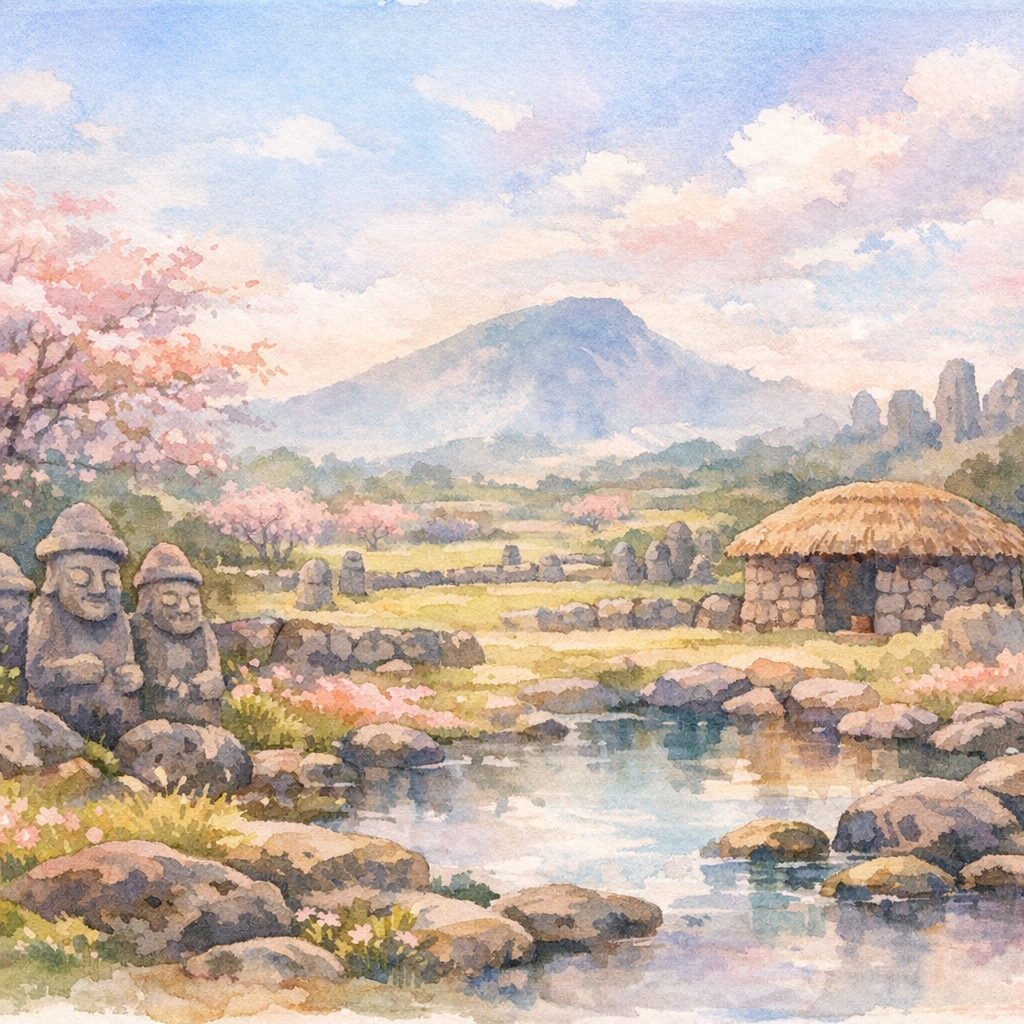
Okay, Let’s Talk About Jeju Stone Park. No, Really.
When people talk about Jeju, the conversation usually goes in a very predictable direction. Hallasan Mountain, pretty beaches, tangerines, black pork, maybe a cafe with a sea view. And yeah, I get it. Those things are lovely. I’m not here to pretend I don’t enjoy a good ocean-view coffee like everyone else.
But honestly, after visiting Jeju several times, I started feeling like I was only looking at the island’s surface. The nice surface, sure. Very photogenic. But still just the surface.
That’s why Jeju Stone Park hit me a little differently.
It’s not the loudest tourist spot. It doesn’t scream for your attention with neon signs or giant souvenir shops. It just sits there, wide and quiet, full of volcanic rocks, old myths, strange stone figures, and this deep Jeju mood that is hard to explain until you actually walk through it. 뭐랄까, it feels like the island is talking, but in a very low voice.
I’m a 40-something IT office worker, so my daily life is basically screens, meetings, more screens, and the occasional “why is this server acting weird again?” moment. Maybe that’s why places like this work so well on me. No blinking notification. No Slack message. Just wind, stone, trees, and a lot of space to breathe.
Why Rocks? Sounds Boring Until You’re Actually There
So yes, at a glance, Jeju Stone Park sounds like a park full of rocks. Which is technically true. But saying that is like saying ramen is just hot water and noodles. It misses the whole point.
Jeju is a volcanic island. Everything here started with fire, lava, ash, and time. The black stones you see everywhere are not decoration. They are the island’s bones, really. Stone walls around old houses, stone towers by the road, stone grandfathers standing like quiet guardians... Jeju’s landscape is built from this stuff.
The famous dol hareubang, those round-eyed “stone grandfather” statues you see on postcards and magnets, are not just cute tourist icons. They were traditionally seen as protectors, almost like spiritual gatekeepers. Some look funny, some look wise, and some look like they’ve been silently judging humans for hundreds of years. I kind of respect that energy.
Inside the park, you’ll find stone sculptures, old-style Jeju houses, mythological spaces, and trails that feel less like a museum path and more like wandering through a slow, strange story. There’s a big focus on Jeju mythology, especially the island’s creation stories and goddess legends. If you’re the kind of traveler who likes understanding why a place feels the way it does, this is where Jeju starts to make more emotional sense.
And the scale is bigger than you expect. This is not a “walk around for ten minutes and leave” kind of place. The land opens up, the stones get taller, the wind moves through everything, and suddenly you’re not thinking, “Oh, rocks.” You’re thinking, “Okay… this island has a personality.”
The Mood: Quiet, Strange, and Honestly Kind of Beautiful
The best part of Jeju Stone Park is the atmosphere. Not one specific statue. Not one famous photo zone. It’s the whole feeling.
There are moments when the path gets quiet and you hear only your own footsteps. Then the wind comes through the trees, and the stone figures look almost alive for a second. Not scary, exactly. Just ancient. Like they were here long before your travel plan and will still be here long after your rental car is returned.
As someone who spends too much of his life checking dashboards and fixing tech problems, I really liked that slow rhythm. Nobody was rushing me. Nobody was pushing a “must-see in 30 minutes” route. I just wandered. I stopped when something looked interesting. I took a photo, then didn’t take a photo, then just stood there like a tired office worker finally remembering he has a soul. Dramatic? Maybe. But travel does that sometimes.
If you visit on a cloudy day, the place gets even better. Sunny Jeju is pretty, of course, but cloudy Jeju has depth. The dark volcanic stones look heavier, the green forest feels richer, and the whole park takes on this fantasy-drama mood. I actually prefer it that way. Not every travel photo needs blue sky and perfect smiles.
K-Drama and K-Pop Vibes Around Jeju Stone Park
Now, if you’re coming to Korea because of K-drama filming locations or K-pop culture, Jeju is a very good island to keep on your radar. It’s not only Seoul that has the magic. Jeju shows up again and again in Korean entertainment because the scenery is so different from the mainland. Volcanic cliffs, black rock beaches, windy fields, old stone walls... it gives directors and photographers a lot to play with.
Jeju Stone Park itself has the kind of visual mood that feels made for fantasy scenes. Tall stones, misty walking paths, myth-inspired spaces, and that slightly unreal atmosphere. Fans often connect places like this with the emotional, otherworldly feeling of dramas such as “The Legend of the Blue Sea”, especially because Jeju’s landscapes were used for that dreamy island mood. If you’re planning a detailed filming-location route, I’d still check the latest official location notes before you go, because drama-location information online can get messy. But as a fan-photo spot? Oh, it absolutely works.
And for K-pop fans visiting Jeju, I’ll say this: Jeju is less about one giant idol landmark and more about the feeling of Korean celebrity downtime. Idols, actors, musicians, and variety shows love Jeju because it looks relaxed but cinematic at the same time. Lee Hyori’s Jeju life, IU’s appearance on “Hyori’s Bed & Breakfast,” and countless idol travel clips have made the island feel like Korea’s soft, healing side.
That’s why a place like Jeju Stone Park fits better than you might think. It’s not flashy. It’s not a stage. But it gives you those moody, slightly mysterious photos that look like an album jacket concept waiting to happen. Stand between the dark stones, let the wind mess up your hair a little, don’t over-pose... and suddenly your photo has more character than another cafe selfie.
Nearby K-Drama Spots You Can Add to the Same Jeju Trip
If you’re already renting a car, you can connect Jeju Stone Park with other Jeju filming-location-style stops. Don’t try to squeeze everything into one afternoon, though. Jeju roads look easy on the map, then suddenly you’re behind a slow truck, the wind is strong, and your schedule starts laughing at you.
- Seopjikoji: One of Jeju’s classic drama scenery spots. The coastal cliffs, lighthouse, and open fields have that big romantic K-drama energy. It became famous through dramas like “All In,” and honestly, it still feels cinematic even if you don’t know the show.
- Seongsan Ilchulbong: More nature landmark than drama set, but the view is iconic. If you want that “I really came to Jeju” photo, this is a strong choice.
- Hamdeok Beach: Not exactly hidden, but very easy to love. Clear water, cafes, seafood places, and a relaxed atmosphere. It pairs nicely with Jeju Stone Park because you get both the volcanic inland mood and the beach mood in one day.
- Dongmun Market in Jeju City: Great for night-market snacks and casual food shots. If you follow Korean travel content, this kind of market scene probably feels familiar already.
How I’d Actually Walk Through Jeju Stone Park
Some attractions are better with a tight plan. This one? Not really. I’d say give yourself time and don’t treat it like a checklist.
Start with the museum-style indoor areas if the weather is rough, then move outside slowly. The outdoor paths are where the park really opens up. You’ll see recreated Jeju village structures, stone sculptures, and symbolic spaces related to Jeju’s creation myths. Some parts feel educational, some feel spiritual, and some just feel wonderfully weird.
One thing I noticed when I visited: people who rushed through looked underwhelmed. People who slowed down looked happier. It’s that kind of place. If you only want one big “wow” moment, maybe you’ll miss the quiet charm. But if you let the place breathe a little, it grows on you.
My very practical tip? Wear comfortable shoes. I know that sounds boring, but the park is bigger than it looks, and Jeju weather can change quickly. I once went in what I thought were “good enough” shoes, and after an hour of walking around stone paths and open areas, my feet were sending me strongly worded emails. Also, bring a light jacket even if the morning feels warm. Jeju wind has no respect for your outfit plan.
Food Near Jeju Stone Park: Where I’d Eat After All That Walking
After walking around Jeju Stone Park, you will probably be hungry. Not “maybe I’ll have a snack” hungry. More like “please give me hot food and a chair” hungry.
The area around the park is quieter than Jeju City or the beach zones, so don’t expect endless restaurant streets right outside the gate. But that’s not a bad thing. Some of the better meals in Jeju are in simple places, the kind where the menu is short, the owner looks busy, and the food comes out without much decoration but with real flavor.
Gyorae-ri Area: Chicken Noodles, Simple Local Food, Very Comforting
Near Jeju Stone Park, the Gyorae-ri area is a good place to look for local-style meals. You’ll often find restaurants serving dak kalguksu, which is chicken noodle soup with hand-cut noodles. It’s warm, rich, and not too spicy, so foreign visitors who are still adjusting to Korean flavors usually handle it well.
This is the kind of food I personally crave after walking in windy weather. Nothing fancy. Just a deep broth, noodles, maybe some kimchi on the side, and your body goes, “Yes, thank you, we needed this.”
Hamdeok Beach: Better for Foreign Visitors Who Want Options
If you want more restaurant choices and a prettier after-meal walk, drive toward Hamdeok Beach. It usually takes around 20 to 30 minutes depending on traffic, and it’s a nice change of mood after the quiet stone park.
Hamdeok has seafood restaurants, black pork places, bakeries, brunch cafes, and coffee shops with ocean views. Is it more touristy? Yes. But touristy doesn’t automatically mean bad. Sometimes you’re tired, you want a menu with pictures, and you don’t want to play restaurant roulette. I respect that.
- Seafood ramen: Popular, easy to order, and very Jeju-feeling when eaten near the beach.
- Black pork barbecue: A Jeju classic. Great if you’re traveling with friends and want a proper sit-down meal.
- Abalone porridge: Soft, savory, gentle on the stomach, and a good choice if you don’t want anything too spicy.
- Peanut ice cream or tangerine desserts: Very touristy, yes, but also fun. No shame.
Dongmun Market: If You’re Heading Back to Jeju City
If your route goes back toward Jeju City, Dongmun Market is a solid evening stop. It’s not right next door to the park, but it works well if your hotel is in the city. You can try black pork skewers, abalone gimbap, grilled seafood, tangerine sweets, and all those colorful street foods that look suspiciously good on Instagram.
Here’s a tiny thing I do in Korean markets: I don’t always chase the longest line. Sometimes the longest line is just the most viral stall. I look for a stall where local older people are eating quietly or buying takeaway without making a big fuss. That usually tells you the food has survived longer than one TikTok trend.
Good to Know Before You Go
Jeju Stone Park is easier if you have a rental car. Public transportation exists, but Jeju buses can eat your time if you’re trying to connect several places in one day. If you’re traveling with family or friends, renting a car gives you much more freedom, especially because nearby attractions are spread out.
- Best season: Spring and autumn are the easiest. Summer can be hot, and winter can be windy in a very personal way.
- Best weather: A slightly cloudy day actually suits the park beautifully. Don’t be too disappointed if the sky isn’t bright blue.
- Time needed: Give it at least 1.5 to 2 hours. More if you like photography or slow walking.
- What to wear: Comfortable shoes, layered clothing, and something wind-friendly. Jeju wind loves stealing hats.
- Who will enjoy it: Travelers interested in culture, mythology, photography, quiet nature, and deeper Jeju stories.
- Who might skip it: If you only want beaches, shopping, nightlife, or loud entertainment, this may feel too calm.
My Honest Take: Give the Rocks a Chance
I’ll be straight with you. Jeju Stone Park is not the place I’d recommend to someone who wants constant excitement. There are no roller coasters, no giant shopping complex, no “look at me” attraction shouting from every corner.
But that’s exactly why I liked it.
It gives you a slower Jeju. A stranger Jeju. The Jeju that existed before travel hashtags and cafe maps. You walk among stones shaped by fire, weather, belief, and time, and somehow the island feels less like a vacation product and more like a living place.
If you’re a K-drama fan, you’ll enjoy the cinematic mood. If you’re into K-pop travel aesthetics, you’ll find plenty of moody photo spots. If you’re just tired from city life and want to breathe somewhere quiet, well... this place understands that too.
So yeah, give the rocks a chance. Sounds silly, I know. But Jeju has a way of hiding its best stories in plain sight, and sometimes they’re not in the ocean or on a mountain. Sometimes they’re just standing there, black and silent, waiting for you to slow down enough to notice.
And if you see a dol hareubang on the way out, give him a little nod from me. He looks like he knows things.
댓글
댓글 쓰기