Discover Suwon Hwaseong Fortress: A Warm, Real-Life Guide to Korea’s UNESCO Gem for K-Drama Fans, K-Pop Lovers, and Foodies
Quick Travel Mood
If you want a day trip from Seoul that feels historic, cinematic, easy to reach, and genuinely satisfying, Suwon Hwaseong Fortress is one of those places that quietly steals your heart. It has grand stone walls, peaceful palace courtyards, lovely neighborhood cafés, classic Korean food, and just enough K-drama atmosphere to make you slow down and take way too many photos.
Why Suwon Hwaseong Fortress Is Worth the Trip from Seoul
Suwon Hwaseong Fortress is one of the easiest UNESCO World Heritage Sites to visit from Seoul, which is probably why so many travelers end up loving it more than they expected. It sits in Suwon, a city just south of Seoul, and you can reach it in about an hour by subway or train. That means you do not need to plan a complicated overnight trip. You can wake up in Seoul, spend the day walking along centuries-old fortress walls, eat famous Suwon galbi for dinner, and still be back in the capital by night.
The fortress was built between 1794 and 1796 during the reign of King Jeongjo of the Joseon Dynasty. The story behind it is surprisingly emotional. King Jeongjo built Suwon Hwaseong as part of his vision for a new city and as a way to honor his father, Crown Prince Sado. Because of that, the fortress does not feel like a cold military structure. It has a very human story behind it, and when you walk around the walls, gates, and command posts, you can feel that mix of power, grief, ambition, and beauty.
What makes Suwon Hwaseong Fortress so special is the way old Korea and everyday modern Korea sit right next to each other. One minute you are standing under a huge Joseon-era gate, and the next minute you are passing a cute café, a street-food stall, or a small local restaurant packed with people enjoying lunch. It is not a frozen museum piece. It is part of the city’s daily rhythm.
I’ve visited Suwon Hwaseong on days when the sky was bright and clear, and also on a slightly gloomy afternoon when the stone walls looked almost like a scene from a historical drama. Honestly, both versions were beautiful. My personal tip is to avoid rushing it. If you only take a quick photo at the main gate and leave, you miss the softest, prettiest parts of the fortress.
The Best Things to See at Suwon Hwaseong Fortress
The fortress is larger than many first-time visitors expect, so it helps to know which spots are most worth your time. You can walk the full fortress wall if you enjoy long walks, but even if you only have a few hours, there are several highlights that give you the full Suwon Hwaseong Fortress experience.
1. Hwaseong Haenggung Palace
Hwaseong Haenggung Palace is one of the places you really should not skip. “Haenggung” means a temporary palace where the king stayed when traveling outside the main royal palace in Seoul. This was one of the largest and most important temporary palaces of the Joseon Dynasty, and today it is beautifully restored.
The palace grounds are especially charming if you enjoy Korean history, architecture, or K-drama-style scenery. You will see wooden halls, painted roof details, quiet courtyards, and wide open spaces that feel made for slow wandering. It is also one of the best places in Suwon for photos, especially if you rent or wear hanbok, traditional Korean clothing.
Compared with Seoul’s famous palaces like Gyeongbokgung or Changdeokgung, Hwaseong Haenggung usually feels more relaxed. There may be school groups or weekend visitors, but it rarely feels as overwhelming as the biggest tourist spots in Seoul. That makes it wonderful for travelers who want photos without constantly dodging crowds.
2. Paldalmun Gate
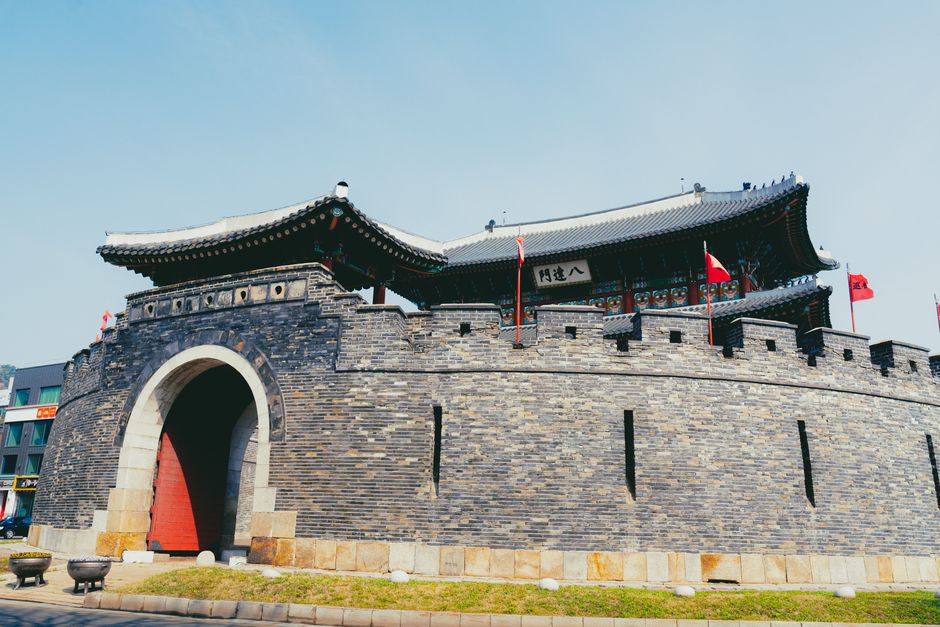
Paldalmun Gate, also known as the South Gate, is one of the most recognizable landmarks of Suwon Hwaseong Fortress. It stands in the middle of the city, surrounded by roads, shops, and local life, which creates a fascinating contrast. The gate itself is grand and dignified, but the area around it feels lively and everyday.
This is a great starting point if you want to get a first impression of the fortress. The massive stone base and wooden upper structure look especially beautiful in the late afternoon, when the light softens and the gate begins to feel more dramatic. If you enjoy photography, step back a little and capture the gate with the modern city around it. That mix is exactly what makes Suwon so interesting.
3. Seojangdae Command Post
If you are willing to walk uphill, Seojangdae is one of the most rewarding spots at Suwon Hwaseong Fortress. This was the western command post, and it gives you a wide view over Suwon. It is the kind of place where you naturally pause for a while, catch your breath, and think, “Okay, this was worth the climb.”
The path up can feel a little tiring, especially on a hot day, but the view is a lovely reward. You can see sections of the fortress wall curving across the landscape, and the city spreading out beyond it. For visitors who love Korean drama scenery, this area has that classic “standing on the wall, looking out over the world” feeling.
4. Janganmun Gate
Janganmun Gate, the North Gate, is another impressive entrance to the fortress. It is often described as one of the largest gates of its kind in Korea, and it has a strong, elegant presence. If you are walking the fortress wall, Janganmun is a natural stop along the route.
The area around Janganmun also has a more local feel, with restaurants, small shops, and streets that are less touristy than some parts of Seoul. It is a good place to slow down and get a sense of Suwon as a real Korean city, not just a sightseeing destination.
5. The Fortress Wall Walk
The full wall of Suwon Hwaseong Fortress stretches for about 5.7 kilometers. Walking the entire route takes time and energy, but you do not have to do all of it to enjoy the experience. Even a shorter section gives you stone pathways, watchtowers, gates, city views, and plenty of photo opportunities.
If you enjoy walking, I recommend choosing at least one uphill section and one flatter section. The uphill parts offer better views, while the lower sections are easier and let you enjoy the fortress at a more relaxed pace. Wear comfortable shoes, because the stone paths and slopes can be harder on your feet than they look.
My real-life tip: The first time I walked around Suwon Hwaseong, I made the mistake of thinking, “It’s just a fortress wall, how tiring can it be?” Well, my legs definitely had opinions by the end of the day. Bring water, wear shoes you trust, and give yourself permission to stop for coffee or snacks along the way.
K-Drama Atmosphere and Filming-Location Vibes at Suwon Hwaseong
If you are a fan of Korean historical dramas, Suwon Hwaseong Fortress is a dream location even before you check any specific filming history. The fortress walls, palace courtyards, wooden gates, command posts, and stone paths all have the kind of atmosphere that instantly reminds you of sageuk dramas. You can almost imagine royal guards passing through the gates or a dramatic reunion happening beside the wall at sunset.
Hwaseong Haenggung Palace and the surrounding fortress area have long been associated with Korean historical productions, cultural performances, and traditional events. Even when a specific drama scene is not marked with a sign, the mood here feels deeply familiar to anyone who has watched Korean period dramas. It is one of the easiest places near Seoul to enjoy that Joseon-era visual style without traveling far into the countryside.
Best K-Drama-Style Photo Spots
- Hwaseong Haenggung Palace Courtyards: Perfect for hanbok photos, palace-door shots, and quiet walking scenes that feel straight out of a historical drama.
- Seojangdae: Great for panoramic city views and dramatic “main character moment” photos.
- Paldalmun Gate: Best for grand entrance shots and night photography when the gate is lit up.
- Janganmun Gate: A beautiful spot for wide-angle photos showing the scale of the fortress architecture.
- Fortress Wall Pathways: Ideal for candid walking photos, especially in spring or autumn.
For the prettiest photos, visit in the morning when the light is gentle or in the late afternoon before sunset. Midday can be harsh for photos, especially in summer, and the stone paths can feel hot under the sun. If you are traveling with friends, take turns photographing each other from slightly below the wall line. It makes the fortress look taller and more cinematic.
For K-Pop Fans: Why Suwon Is Still Worth Adding to Your Korea Itinerary
Let’s be honest: Suwon Hwaseong Fortress is not mainly known as a K-pop music video location in the way some Seoul neighborhoods are. However, if you are a K-pop fan visiting Korea, Suwon still belongs on your itinerary because it gives you something many K-pop fans end up loving: the cultural backdrop behind the music, fashion, visuals, and storytelling.
Many K-pop concepts borrow from traditional Korean design, including palace colors, hanbok-inspired styling, fans, drums, old architecture, and royal imagery. When you walk around Hwaseong Haenggung Palace or the fortress gates, those details become real instead of just something you see in a music video or stage performance. It gives you a deeper appreciation for how modern Korean pop culture often blends the old and the new.
Suwon is also close enough to Seoul that you can pair it with a K-pop-focused trip. For example, you might spend one day visiting entertainment-company areas, K-pop shops, or themed cafés in Seoul, and then take a quieter cultural day trip to Suwon. It balances the trip beautifully.
K-Pop-Friendly Things to Do Around Suwon Hwaseong
- Take hanbok photos at Hwaseong Haenggung: If you love idol stage outfits inspired by traditional Korea, wearing hanbok here feels extra special.
- Film your own short travel reel: The fortress walls, palace courtyards, and gates make a beautiful background for Instagram Reels, TikTok videos, or YouTube Shorts.
- Check local event schedules: Suwon sometimes hosts festivals, cultural performances, concerts, and seasonal events. Always check the official Suwon tourism website before your visit.
- Create a K-content day trip: Combine Suwon Hwaseong with Korean food, street snacks, café hopping, and photo spots for a relaxed but memorable fan itinerary.
If your main goal is to find officially confirmed idol filming sites, I recommend checking current fan communities, official tourism pages, or entertainment-company posts before you go. But if your goal is to experience the traditional Korean beauty that often inspires K-pop visuals, Suwon Hwaseong Fortress is absolutely worth your time.
What to Eat Near Suwon Hwaseong Fortress
After a long walk around the fortress, food becomes very important. Luckily, Suwon is famous for one of Korea’s most beloved dishes: Suwon galbi, or grilled beef ribs. The city has a serious reputation for barbecue, and eating galbi here is one of the best ways to end your day trip.
That said, you do not have to eat only barbecue. The area around Hwaseong Fortress and Haenggung-dong has become popular for cafés, casual restaurants, noodle shops, dumplings, and dessert spots. It is easy to find something satisfying whether you want a full Korean meal, a quick snack, or a cozy café break.
Recommended Food Options Near the Fortress
- Suwon Galbi Restaurants: If you eat beef, this is the classic choice. Suwon galbi is usually rich, savory, slightly sweet, and grilled at the table. It is a great meal for groups, couples, or anyone who wants the full Korean barbecue experience.
- Korean Fried Chicken: A casual and foreigner-friendly option, especially if you want something easy after sightseeing. Pair it with beer or a soft drink for a relaxed evening meal.
- Dakgalbi: Spicy stir-fried chicken cooked with cabbage, rice cakes, sweet potatoes, and often cheese. It is fun, filling, and popular with younger travelers.
- Kalguksu: Handmade knife-cut noodle soup, perfect if you want something warm and comforting. It is especially good on cool or rainy days.
- Mandu: Korean dumplings filled with meat, vegetables, or kimchi. Great as a snack if you do not want a heavy meal.
- Bibimbap: Rice topped with vegetables, egg, meat, and gochujang sauce. A good choice for first-time visitors who want a colorful, balanced Korean dish.
- Haenggung-dong Cafés: The neighborhood near the palace has many stylish cafés, some with rooftop views or traditional-style interiors. It is a lovely area for coffee, cake, and a slow afternoon break.
One thing I love about eating near Suwon Hwaseong is that the restaurants feel less intimidating than some busy tourist areas in Seoul. Many places have photo menus, and even when English is limited, staff are usually used to visitors. If you are unsure what to order, look around and see what locals are eating. That little trick has saved me many times, and honestly, it often leads to the best meal.
Food Tips for Foreign Travelers
- Go before peak dinner time: Popular barbecue restaurants can get crowded in the evening, especially on weekends.
- Use Papago or Google Translate: Papago is especially helpful in Korea for menus and short conversations.
- Do not be shy about asking for less spicy food: You can say “not too spicy” or show the translated phrase on your phone.
- Check whether the restaurant specializes in one dish: In Korea, small restaurants that focus on one main dish are often very good at it.
- Save room for dessert: Haenggung-dong cafés are worth visiting, especially if you enjoy pretty interiors and seasonal drinks.
How to Get to Suwon Hwaseong Fortress from Seoul
Getting to Suwon Hwaseong Fortress from Seoul is simple, which is one of the reasons it makes such a great day trip. Most travelers first go to Suwon Station, then take a bus or taxi to the fortress area.
Option 1: Subway from Seoul
You can take Seoul Subway Line 1 to Suwon Station. Depending on where you start in Seoul, the ride usually takes around one hour to one hour and twenty minutes. This is the budget-friendly option, and it is easy if you are comfortable using the subway.
Option 2: Train to Suwon Station
You can also take a regular train from major stations such as Seoul Station or Yongsan Station to Suwon Station. This can be faster and more comfortable than the subway, especially if you catch the right train. Check schedules in advance through Korail or a Korean transport app.
From Suwon Station to the Fortress
Once you arrive at Suwon Station, you can take a local bus or taxi to the fortress. A taxi is usually affordable and convenient, especially if you are traveling with friends or carrying bags. The ride generally takes around 10 to 15 minutes depending on traffic.
If you prefer buses, look for routes heading toward Paldalmun, Janganmun, or Hwaseong Haenggung. Bus routes may change, so it is best to check Naver Map or KakaoMap on the day of your visit.
Practical tip: If you are new to Korea, download Naver Map or KakaoMap before your trip. Google Maps can be helpful for general orientation, but Korean map apps are much better for local buses, walking routes, and accurate travel times.
Best Time to Visit Suwon Hwaseong Fortress
You can visit Suwon Hwaseong Fortress year-round, but the experience changes a lot depending on the season. If you have flexibility, spring and autumn are the most comfortable and photogenic times to go.
Spring: Cherry Blossoms and Soft Weather
Spring, especially April, is one of the prettiest times to visit. The weather is mild, flowers begin to bloom, and the fortress area feels fresh and lively. Cherry blossoms around the walking paths make the stone walls look softer and more romantic.
Summer: Green Views but Hot Weather
Summer brings lush green scenery, but it can be hot and humid. If you visit in summer, go early in the morning or later in the afternoon. Bring water, sunscreen, and a hat. The uphill sections can feel much harder under strong sun.
Autumn: The Most Beautiful Walking Season
Autumn may be the best season for walking the fortress wall. The air is cooler, the sky is often clearer, and the fall colors around the fortress make everything look rich and warm. October and early November are especially beautiful.
Winter: Quiet, Crisp, and Atmospheric
Winter is cold, but the fortress can be wonderfully quiet. If you are lucky enough to visit after snow, the stone walls and palace roofs look magical. Just be careful on icy paths and dress warmly.
Suggested One-Day Itinerary for Suwon Hwaseong Fortress
If you are visiting from Seoul, here is an easy itinerary that gives you history, photos, food, and a relaxed pace without feeling too packed.
- Morning: Leave Seoul and arrive at Suwon Station.
- Late morning: Take a taxi or bus to Hwaseong Haenggung Palace and explore the palace grounds.
- Lunch: Eat near Haenggung-dong or Paldalmun. Choose kalguksu, bibimbap, dakgalbi, or a casual Korean meal.
- Afternoon: Walk part of the fortress wall toward Seojangdae for city views.
- Café break: Stop in Haenggung-dong for coffee, tea, or dessert.
- Evening: Have Suwon galbi or Korean fried chicken before heading back to Seoul.
If you prefer a slower trip, skip the full wall walk and focus on Hwaseong Haenggung, Paldalmun, a short fortress-wall section, and café hopping. You will still get a beautiful experience without exhausting yourself.
Essential Travel Tips Before You Go
- Admission: Walking around the fortress walls and gates is generally free, while Hwaseong Haenggung Palace usually has a small admission fee. Check current prices before visiting.
- Shoes: Wear comfortable walking shoes. The fortress paths include slopes, stairs, and uneven stone sections.
- Time needed: Plan at least half a day. If you want to eat, visit cafés, and walk slowly, make it a full-day trip.
- Apps: Use Naver Map or KakaoMap for directions, and Papago for translation.
- Photos: Bring a portable charger. You will probably take more photos than you expect.
- Weather: Check the forecast. The fortress is mostly outdoors, so rain, heat, or cold can change your plans.
- Language: Major signs often include English, but smaller restaurants may not. Photo menus and translation apps help a lot.
Good to know: Some cultural programs, performances, hanbok experiences, or special events may only run on certain days or seasons. Before you visit, check the official Suwon tourism website or the Hwaseong Haenggung information page for updated schedules.
Final Thoughts: A Day Trip That Feels Like Real Korea
Suwon Hwaseong Fortress is not just a place to check off a UNESCO list. It is one of those destinations where history, local life, food, and Korean pop-culture imagination all come together naturally. You can walk along an 18th-century fortress wall in the afternoon, take photos that feel like a K-drama scene, eat sizzling Korean barbecue for dinner, and return to Seoul with a full camera roll and an even fuller stomach.
For first-time visitors to Korea, Suwon is a wonderful reminder that some of the best travel memories happen just outside the biggest tourist zones. For K-drama fans, the fortress gives you that cinematic historical atmosphere you have seen on screen. For K-pop fans, it offers a deeper look at the traditional beauty that continues to inspire modern Korean culture. And for food lovers, Suwon is simply delicious.
If you have one extra day in your Seoul itinerary, give it to Suwon Hwaseong Fortress. Go slowly, walk as much or as little as you like, eat something warm and satisfying, and let the city surprise you. That is honestly the best way to enjoy it.
댓글
댓글 쓰기